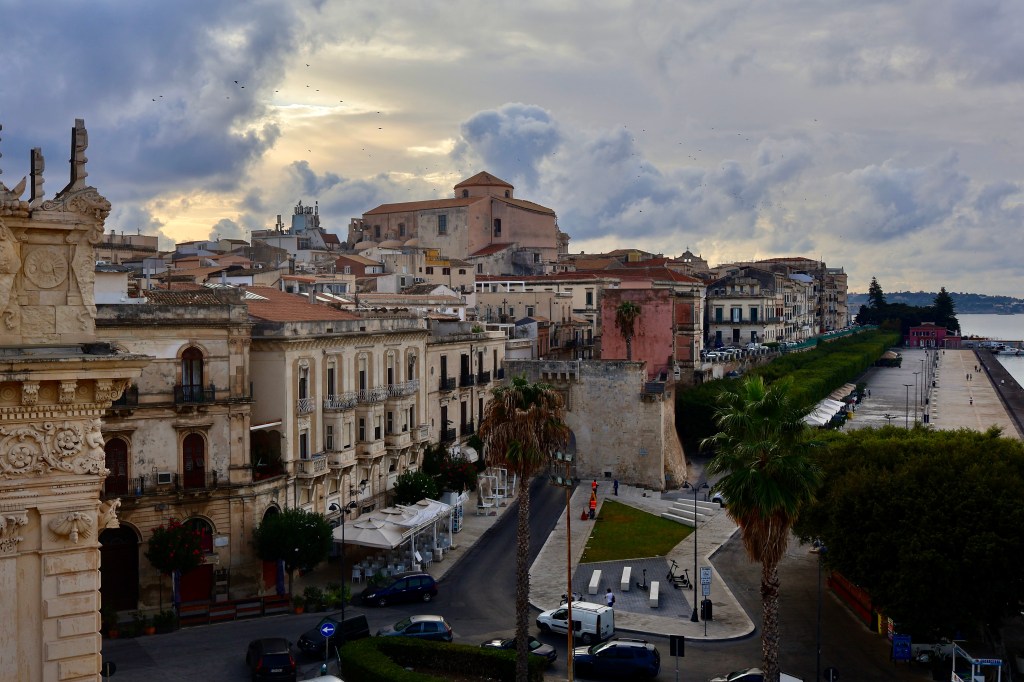
Departing the Aeolian Islands for the mainland, we rented a car with driver and headed south along the east coast of Sicily. Destination — Syracuse and its connecting island, Ortigia. The two cities are historically united. Yet in modern-day reality are very separate entities.
But first, a Conde curated speed visit to Taormina


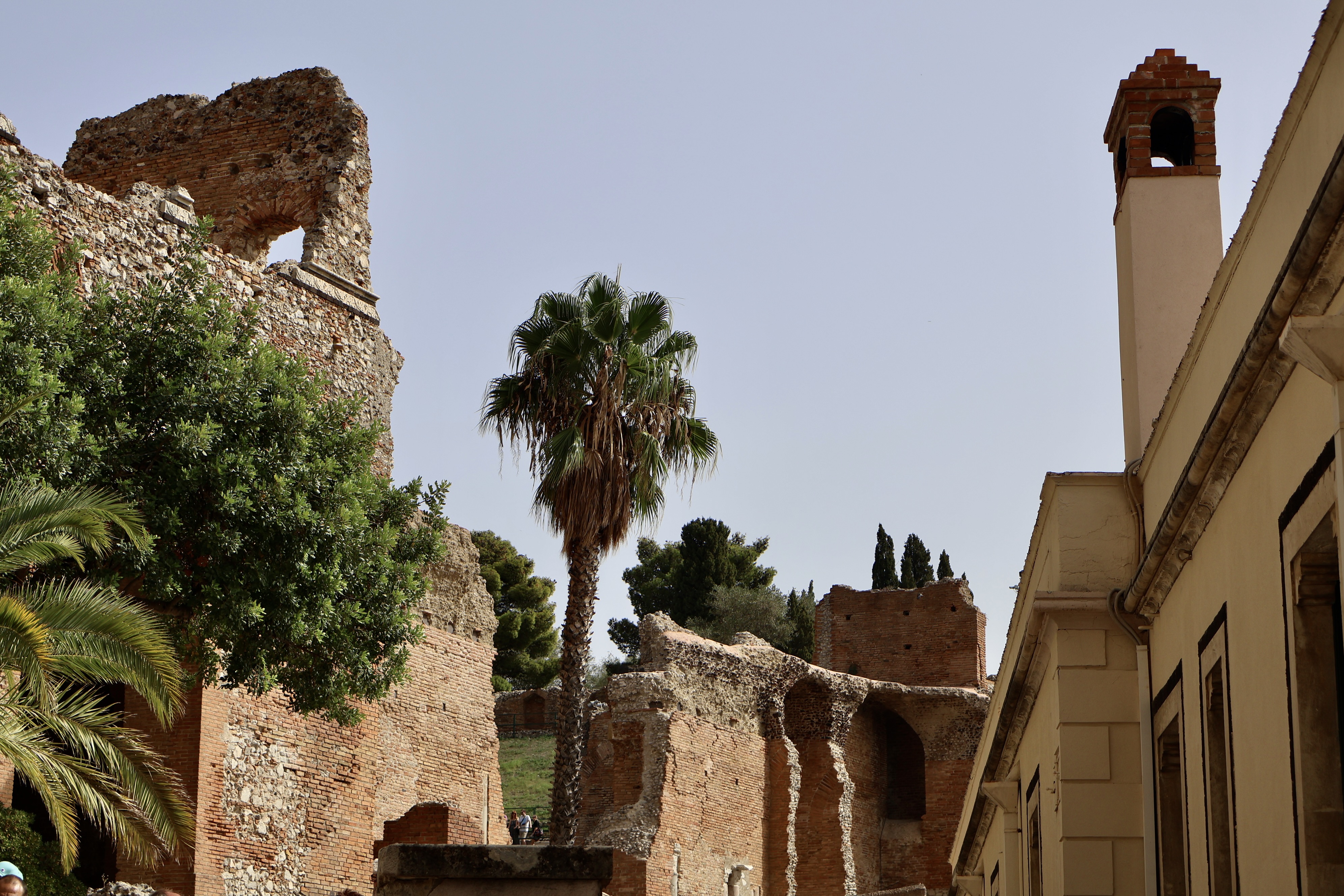
Some quick, very quick, snapshots of Taormina
Conde determined Taormina was a “must see” after we had secured other plans. Not to be deterred Taormina was en-route, sort of, to our Ortigia based hotel. Conde convinced the driver to drop us off with the solemn promise we would return to the pick-up site in exactly 1 ½ hours. Conde’s speed tour agenda included a visit to the ancient Greek Theatre and a gourmet lunch. But, we didn’t have entry tickets to the Theatre and all the restaurants were jam packed with boat loads (literally) of tourists. Yet, somehow we managed to convince a restaurant owner to take pity and personally serve us an amazingly decent lunch. Meanwhile we abandoned the Greek Theatre. We arrived at our rendezvous spot on time thanks to my new Timex wrist watch and an innate herding ability.
ORTIGIA
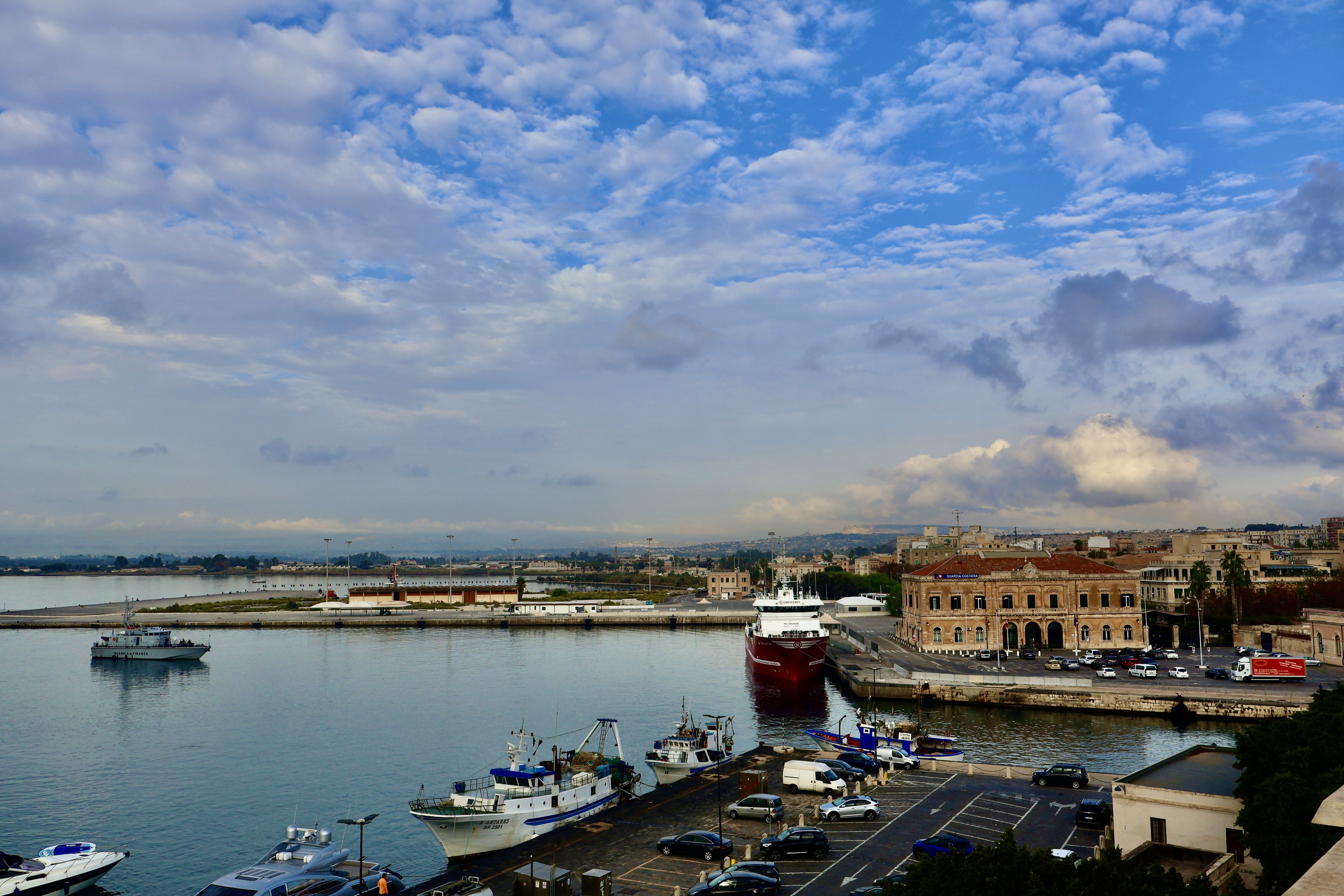

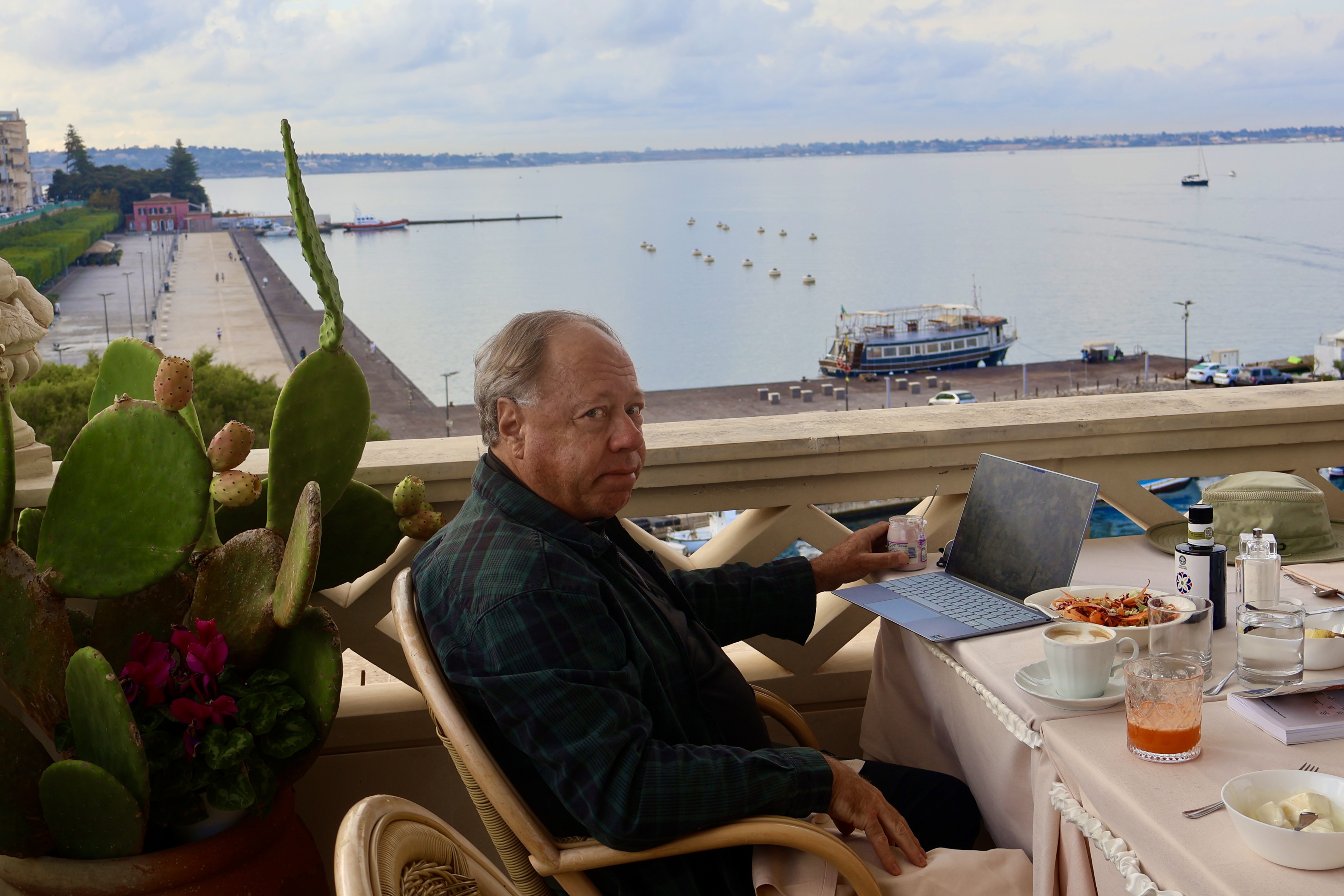
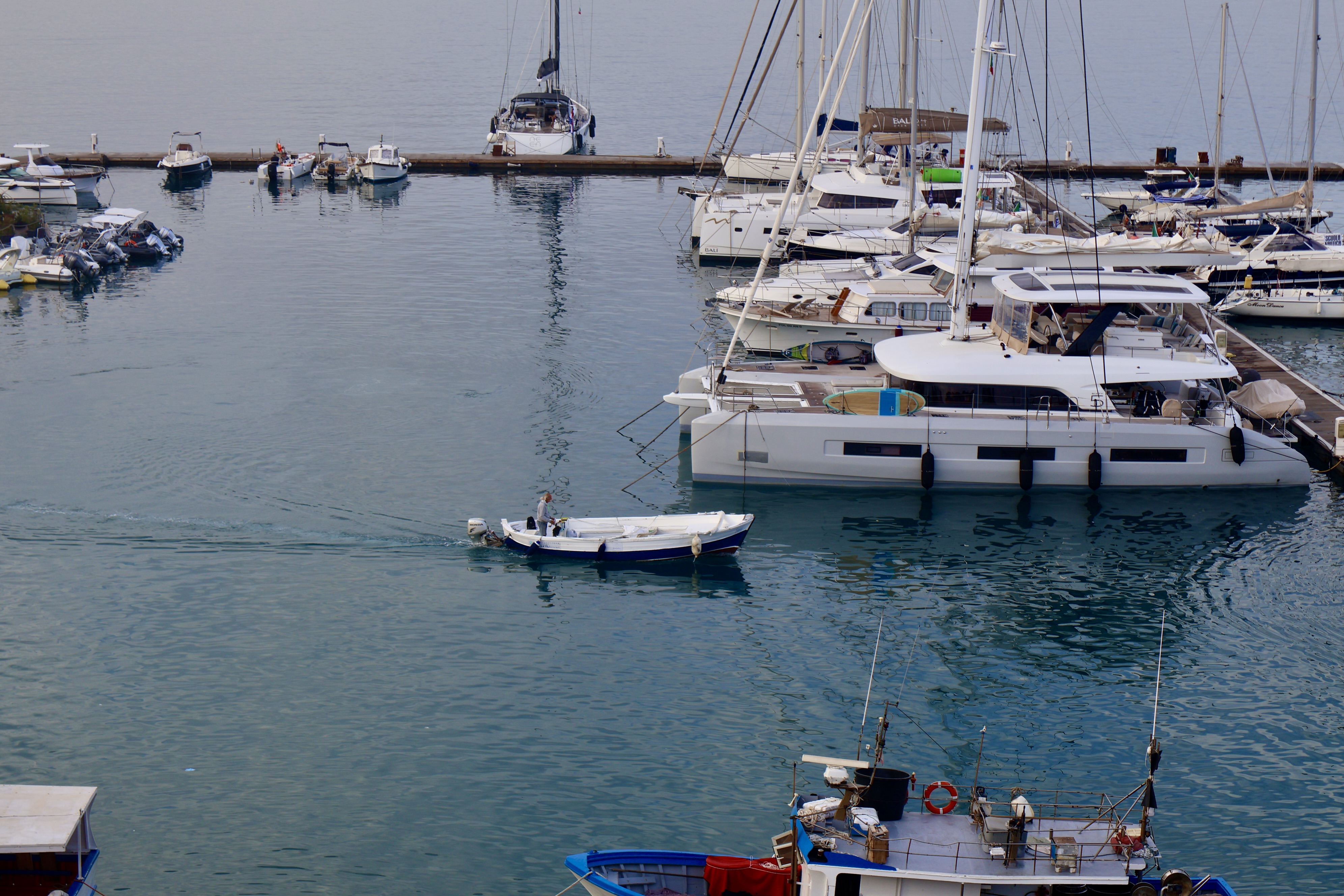
Ortigia a small island, considered the historical center of Syracuse. We had a charmed filled visit. While definitely a tourist area, Ortigia comfortably co-exists with a strong local vibe. A boardwalk surrounds most of the island, offering stellar views of the Ionian Sea. The main harbor is lovely, populated by watercraft, both majestic and modest. Dotted along the boardwalk are several ocean swimming areas. The island is connected to mainland by several short modern bridges. One was originally a draw bridge.

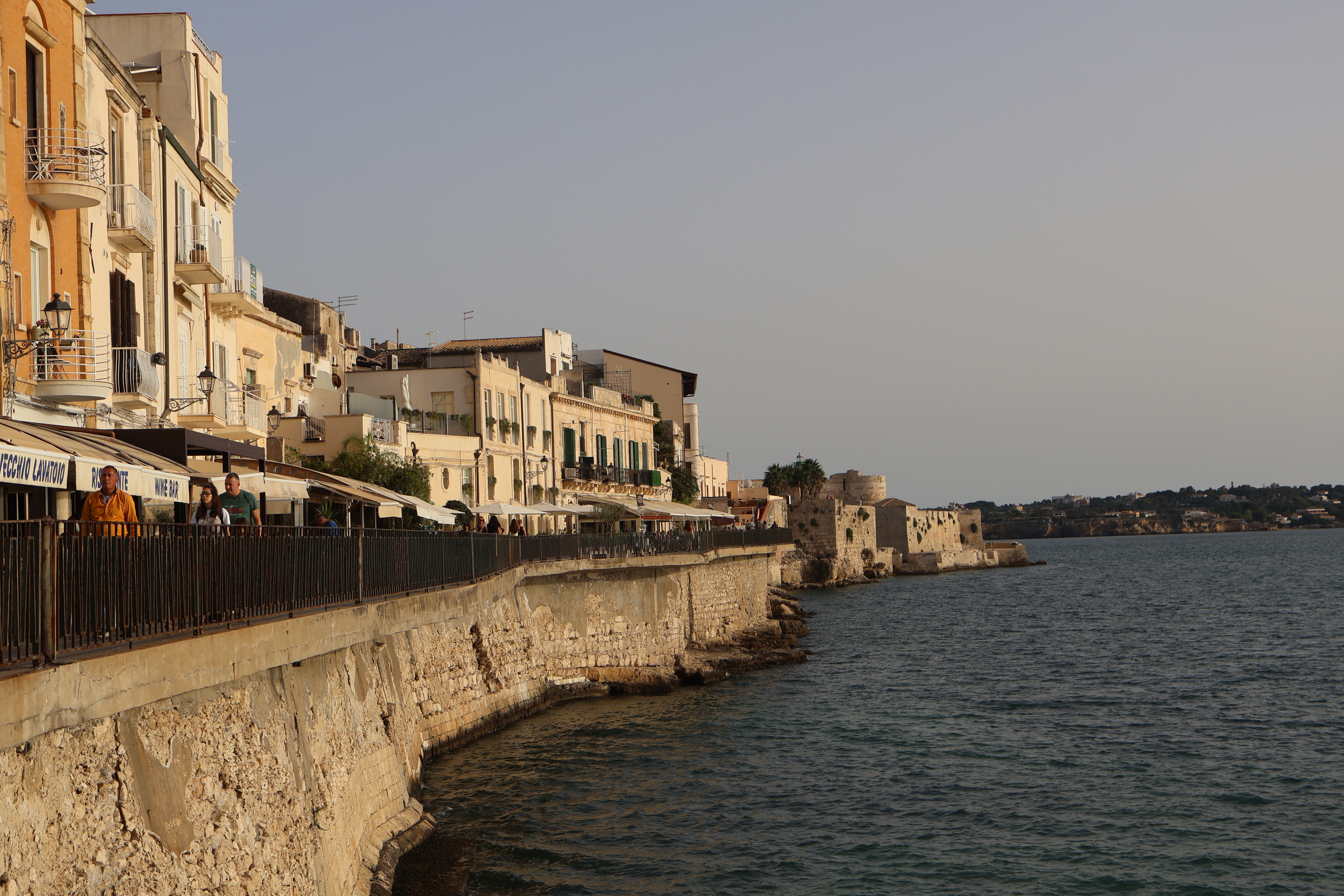


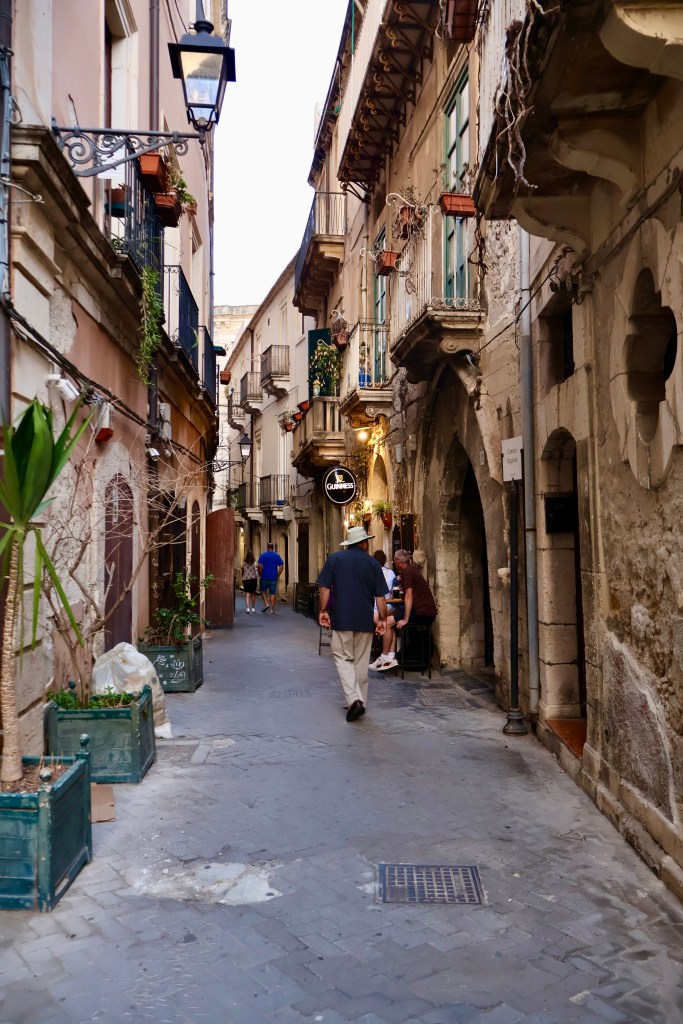
Ortigia hosts a myriad of narrow stone paved streets lined with homes, restaurants and shops. It’s a great place to explore, delving into nooks and crannies, many with quirky self-defined art. Historically, combined with Syracuse. Some of its structures were constructed as early as 6th Century BC.
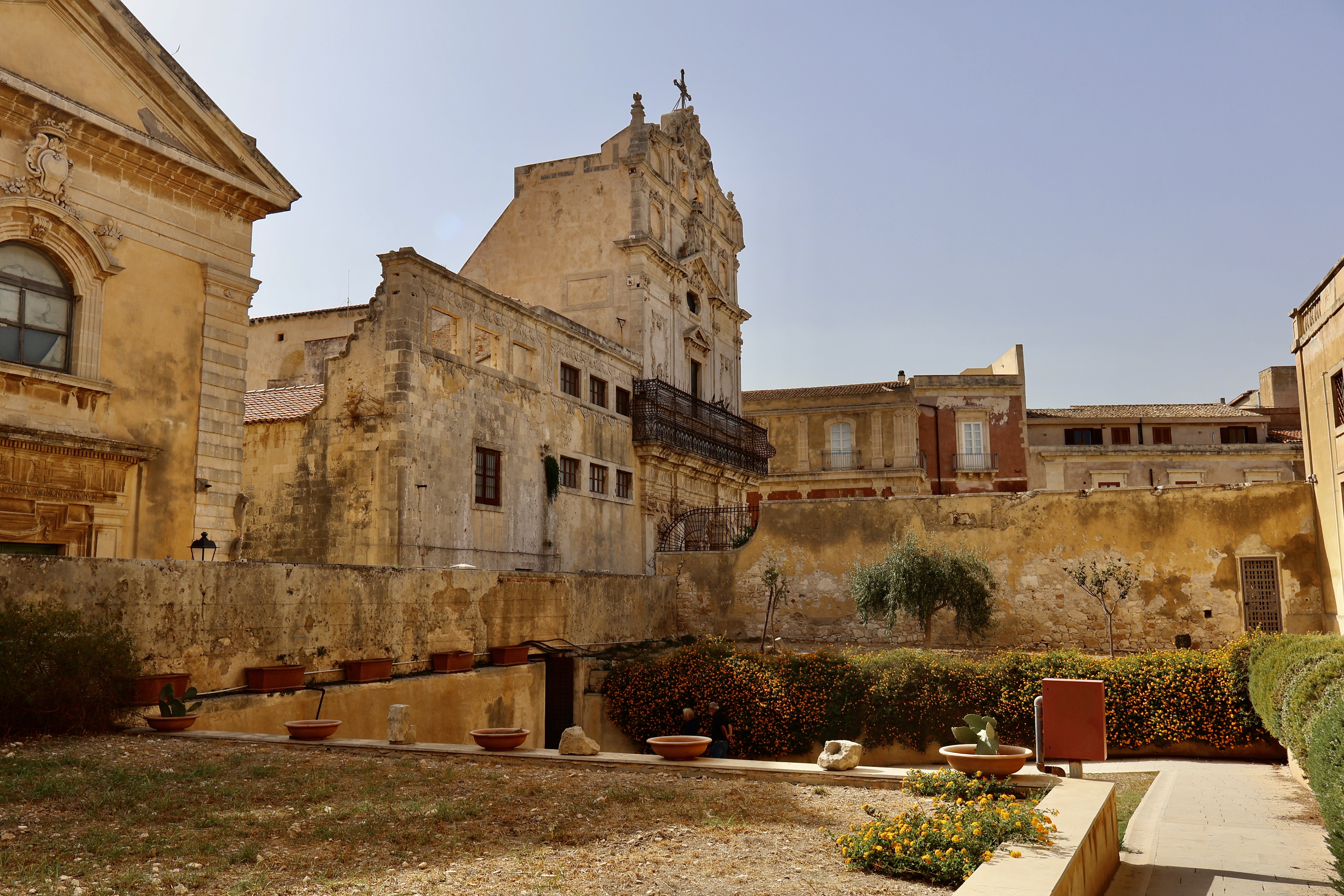
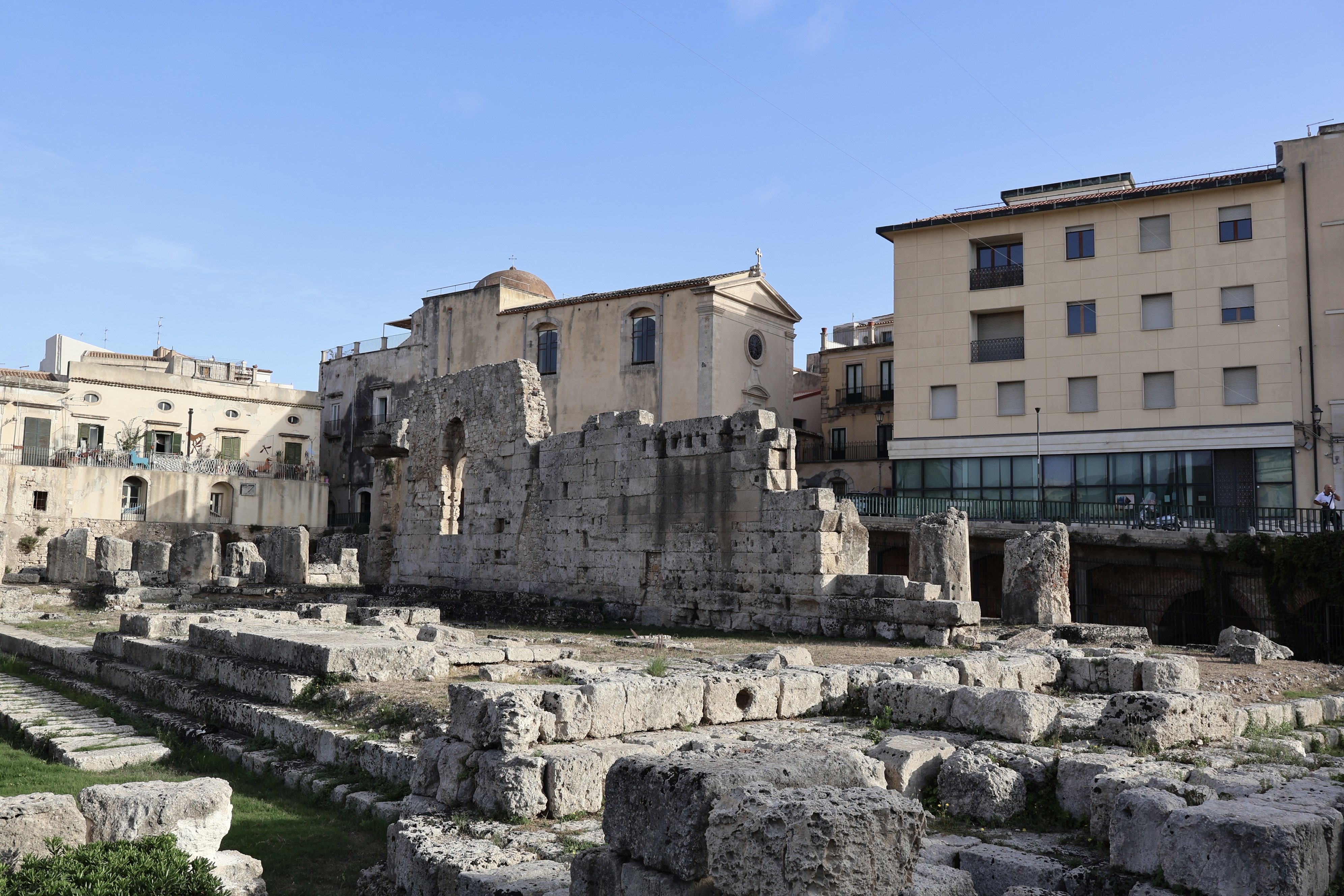
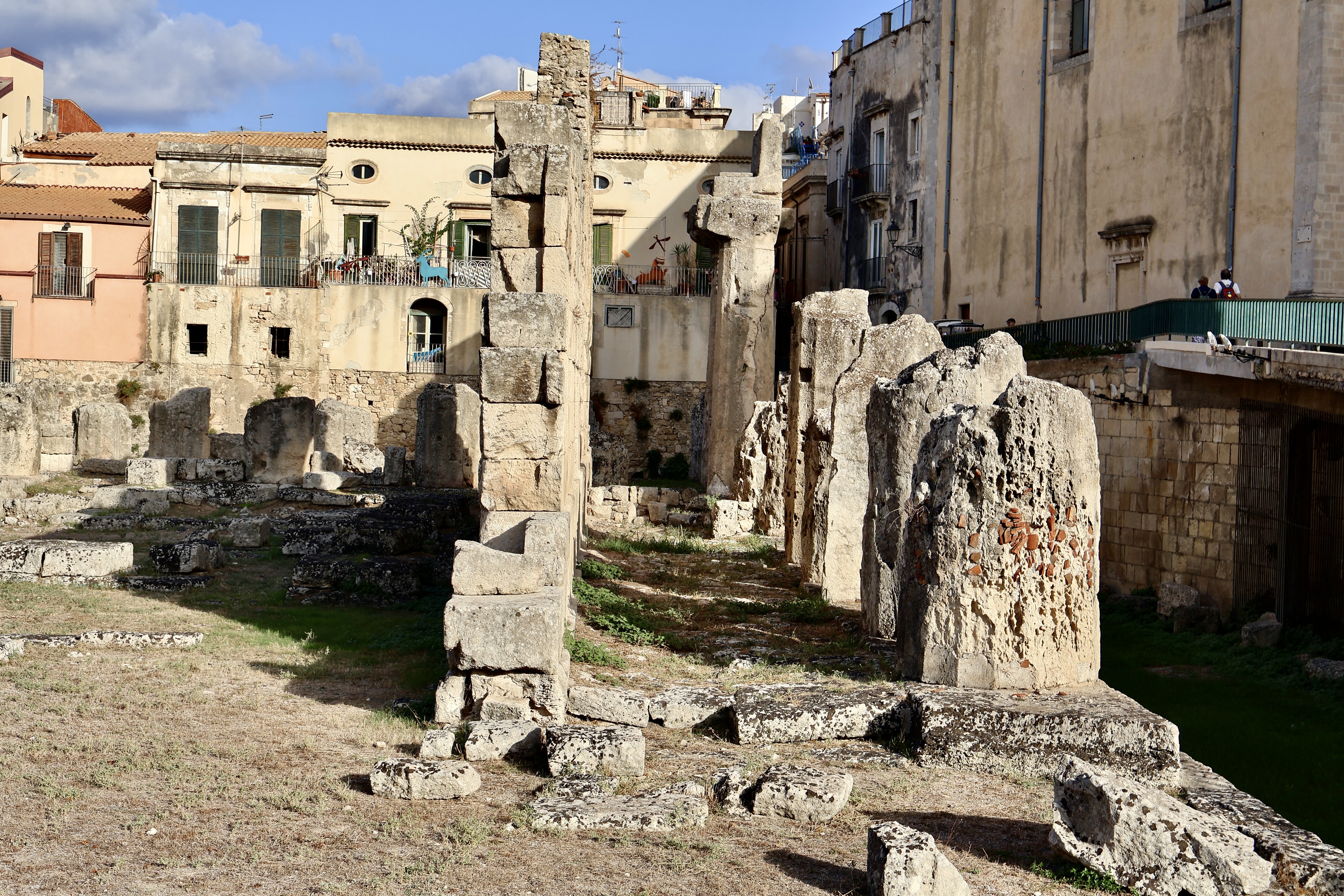
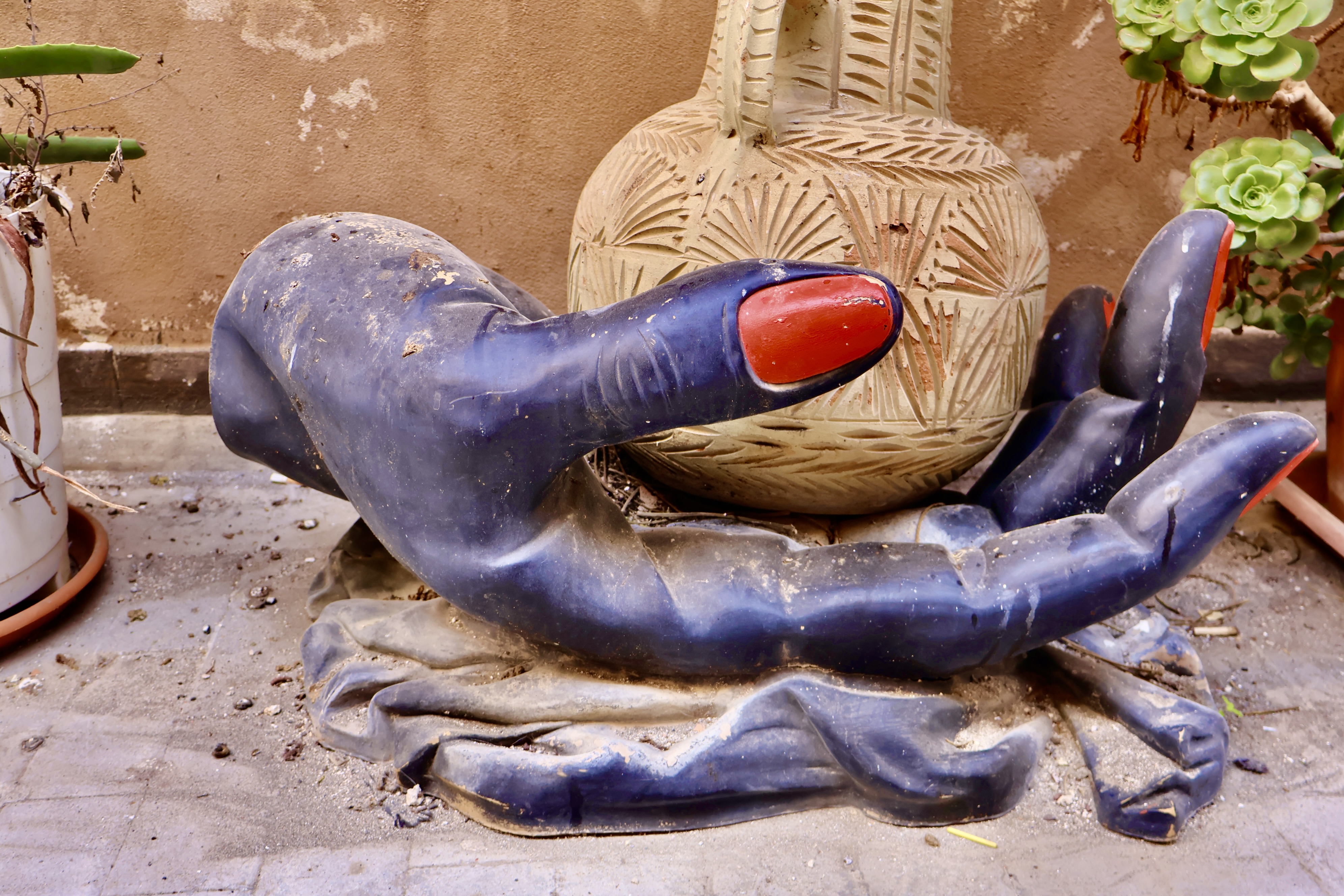
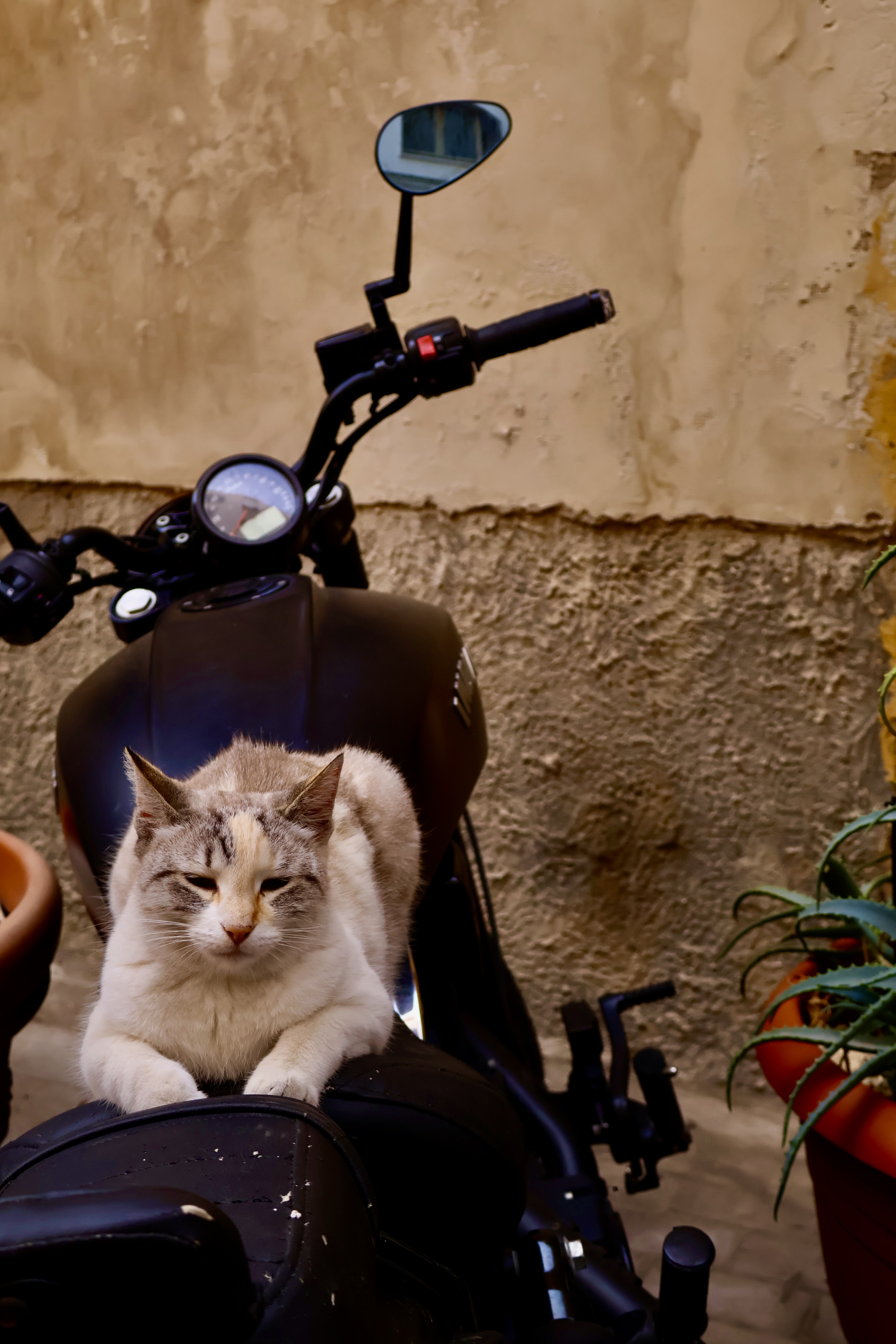
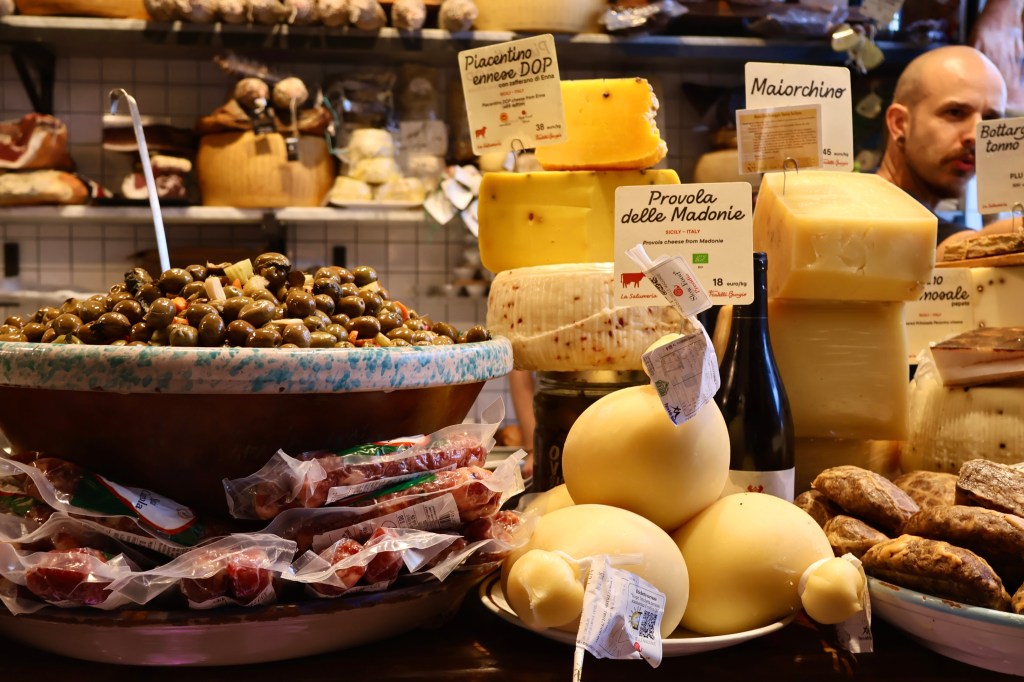
Scenes from around town


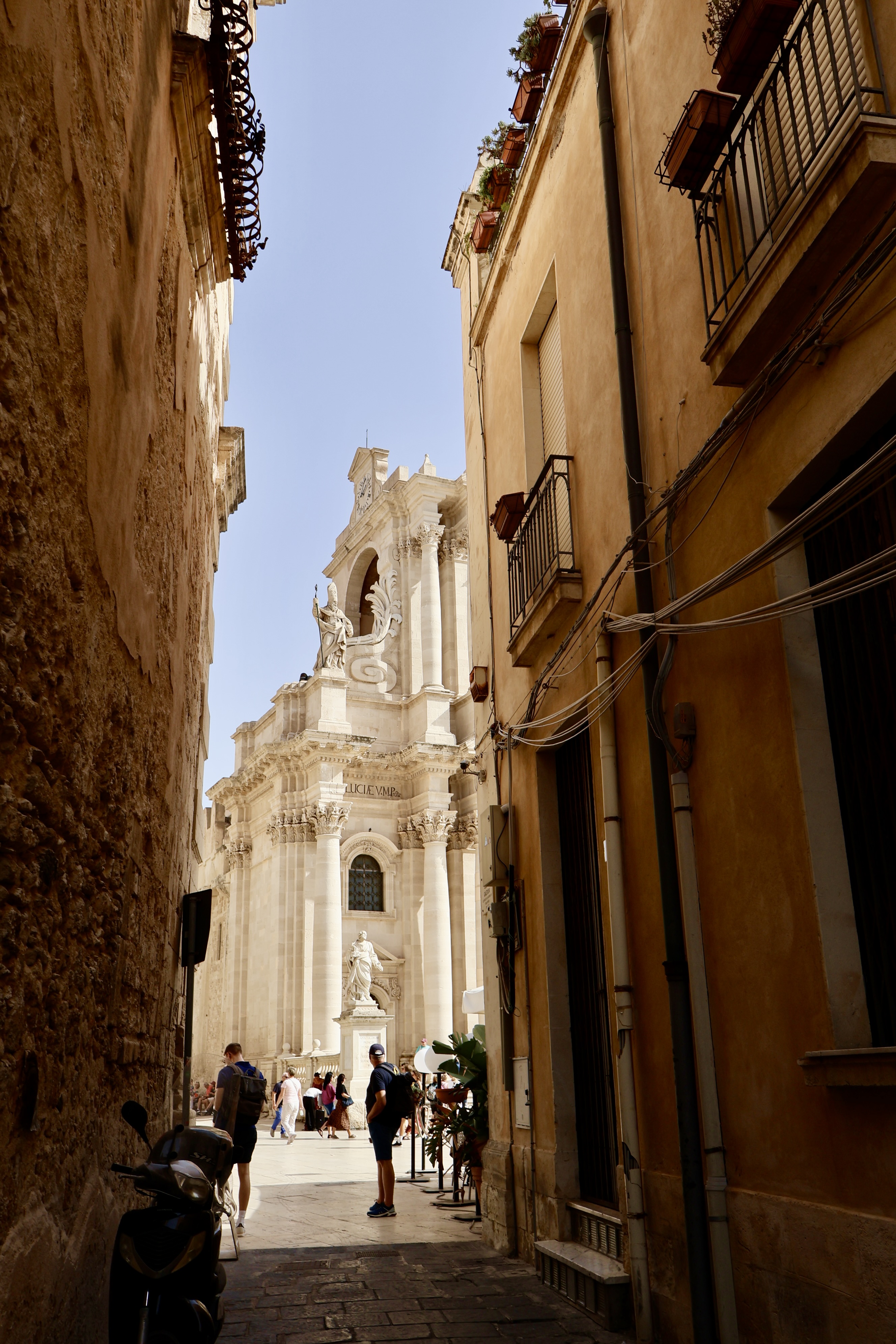



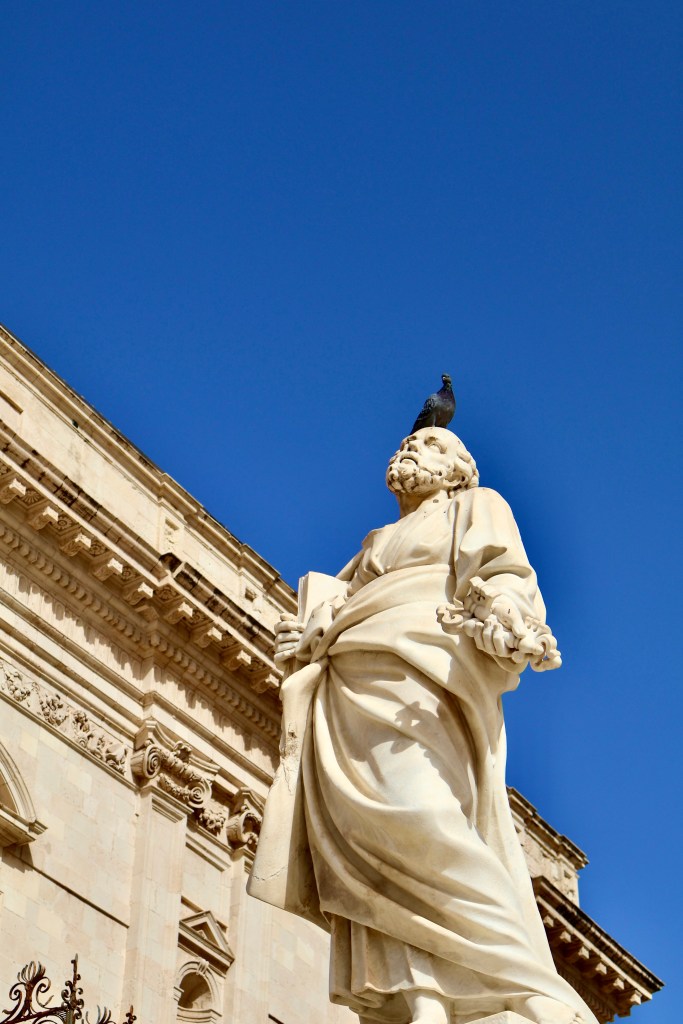
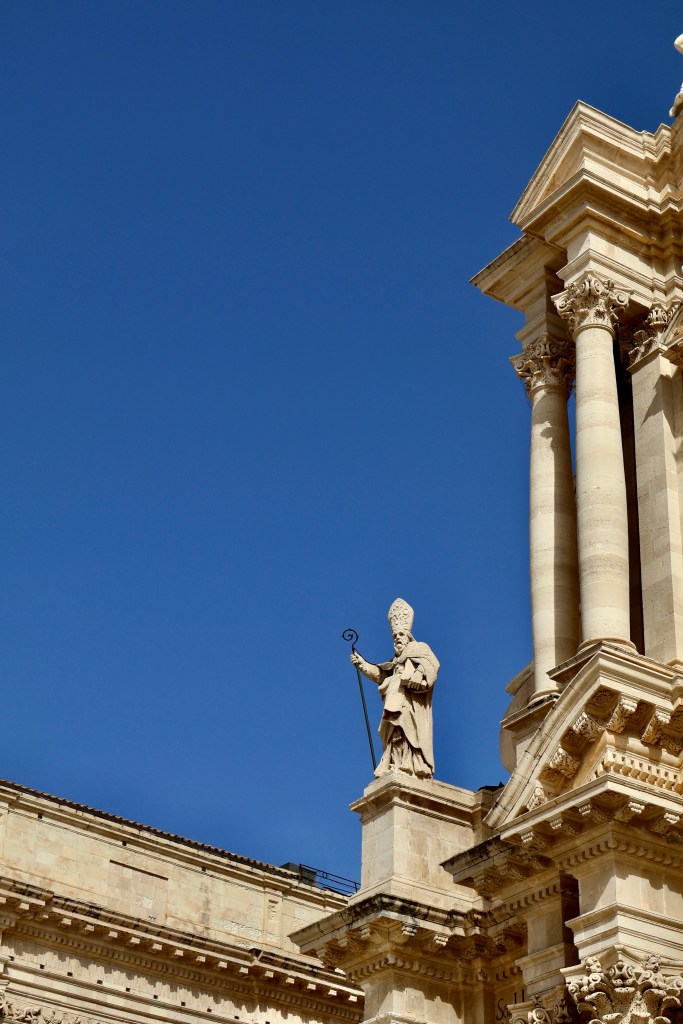
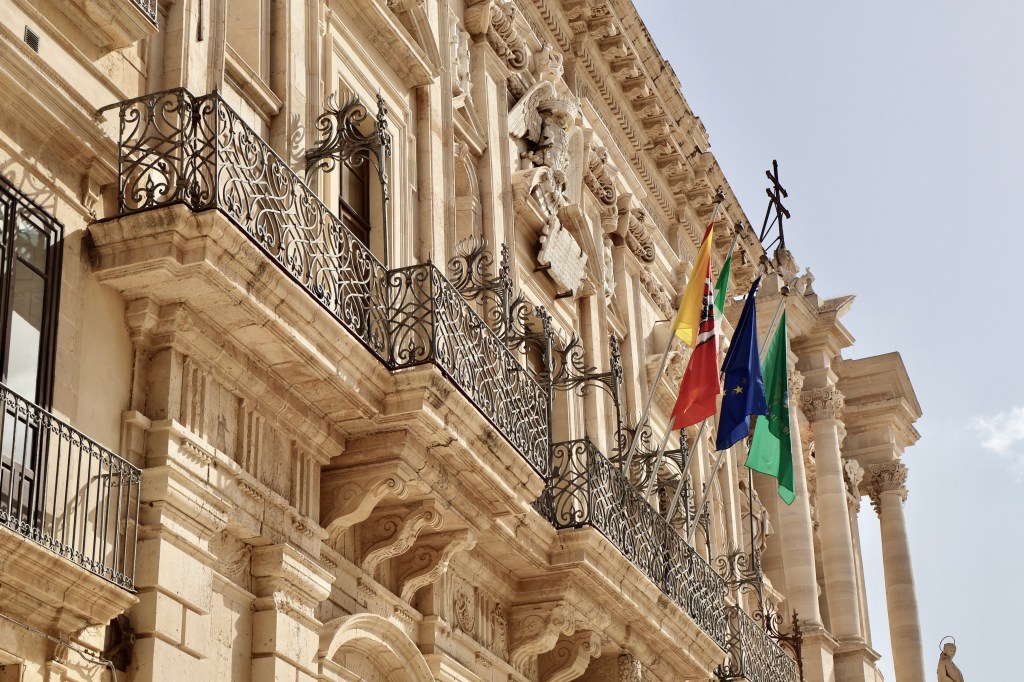
Ortigia’s Piazza Duomo is located in city center, at the island’s highest point. It was originally occupied by the Doric Temple of Athena. Later, it was converted into a Christian church, the present-day Cathedral. In 1693 there was a huge earthquake. Following, the Cathedral facade and surrounding buildings were redesigned using Baroque design. Excavations beneath the Piazza revealed a network of underground tunnels and chambers. These Hypogeum were used as shelters during World War II.

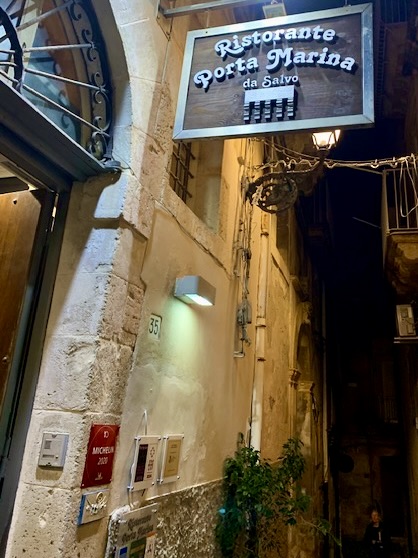
Before we departed the US, Conde researched Ortigia restaurants and found Ristorante Porta Marina da Salvo. Reviews were very good and their website hosted an enticing menu. He telephoned and made dinner reservations for our first night in Ortigia. During that initial phone conversation he talked wine with co-owner Martina. And, in typical Conde fashion, a new friendship formed.
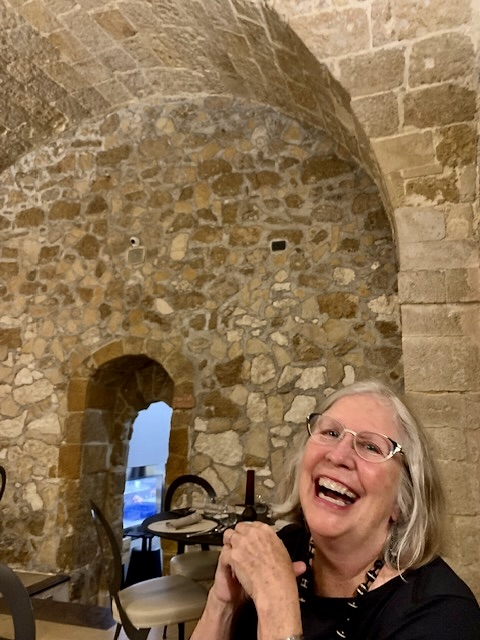

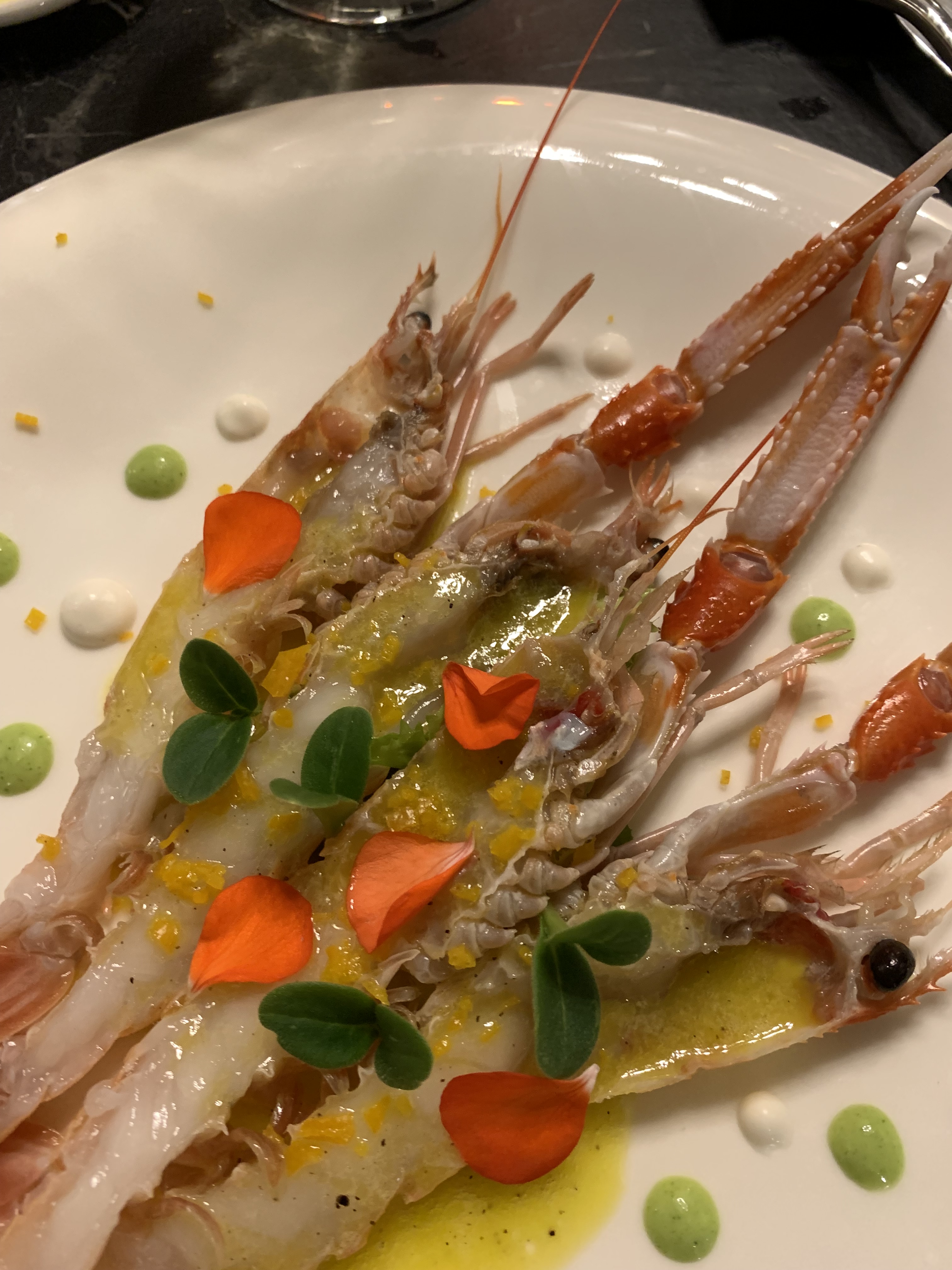

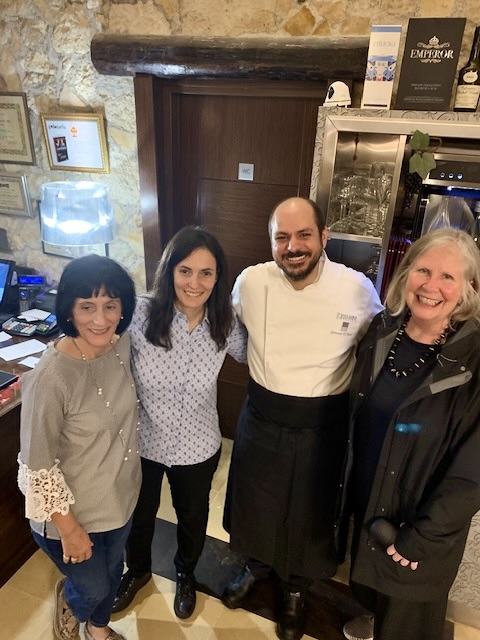
Ristorante Porta Marina is truly a family owned and run business. Fittingly, we enjoyed our final dinner in Sicily with Martina and her family. A leisurely delightful meal and a favorite dive into Sicilian culture. Thanks to Porta Marina for a wonderful memory.
SYRACUSE (aka Siracusa)
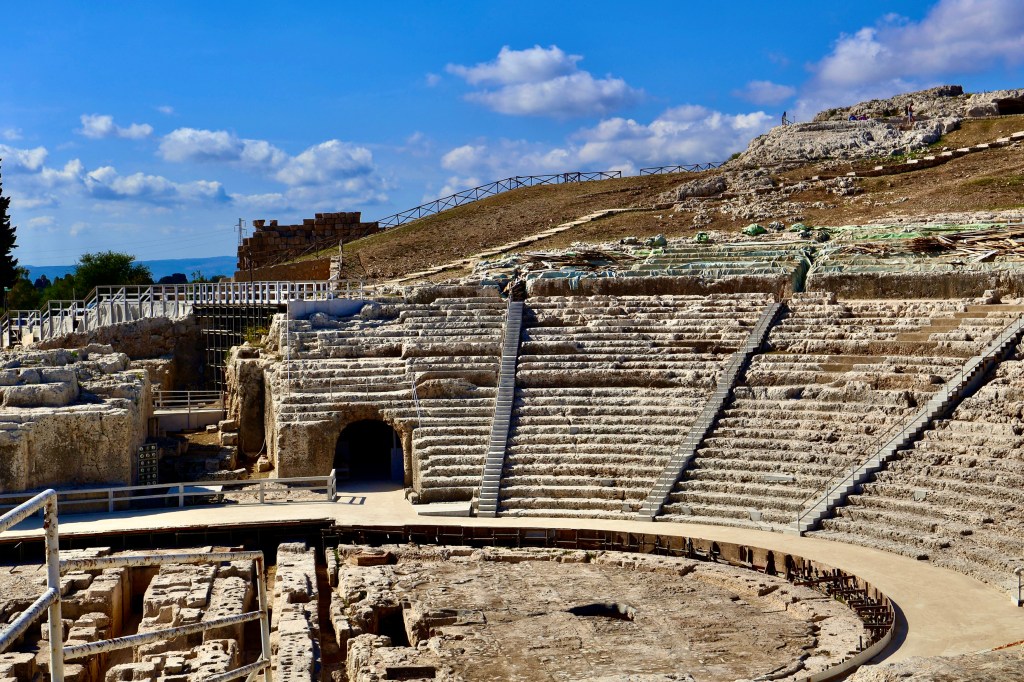

Greek Amphitheater
Siracusa is considered to be the oldest civilization in Sicily. The Neapolis Greek Theatre in Archeological Park is a “must visit.” The park is not easy to navigate. Signage is poor and confusing with multiple meandering paths. We wandered for almost 4 hours in the hot sun, absorbing the place. I would return in a heartbeat. The park is home to the Teatro Greco, constructed in the 5th century BC and built by architect Damocopos. It was rebuilt in the 3rd century. The park houses the largest Greek amphitheater in Sicily, which still stages performances during a popular summer event series. The last tragedies of Aeschylus, including The Persians, first staged in 472 BC, was performed here while he was alive.
Roman Amphitheater used for Gladiator Battles
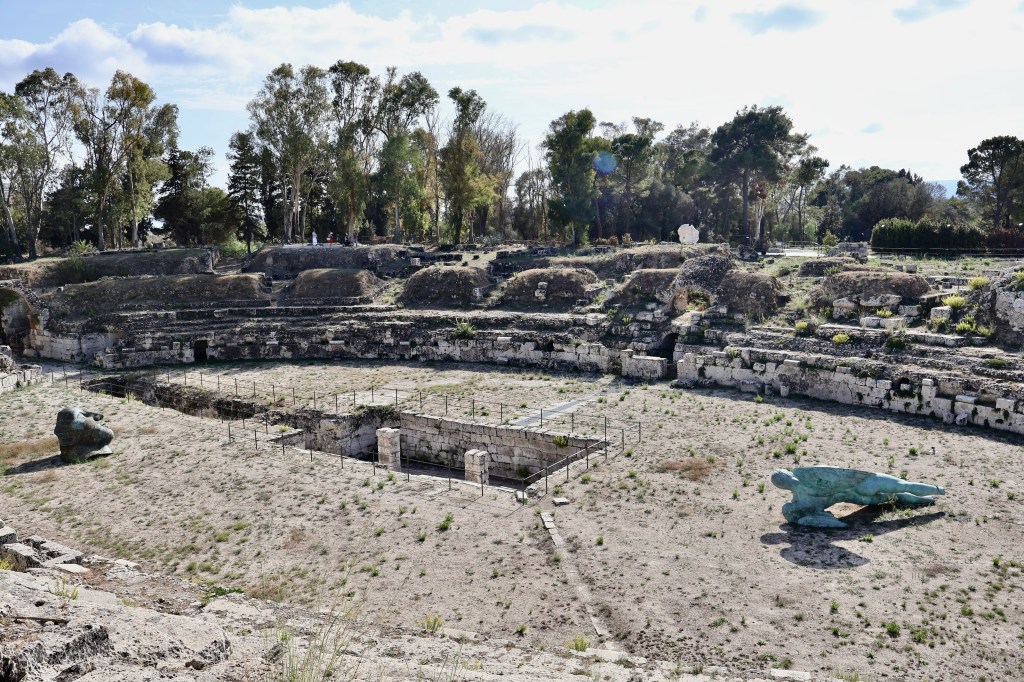

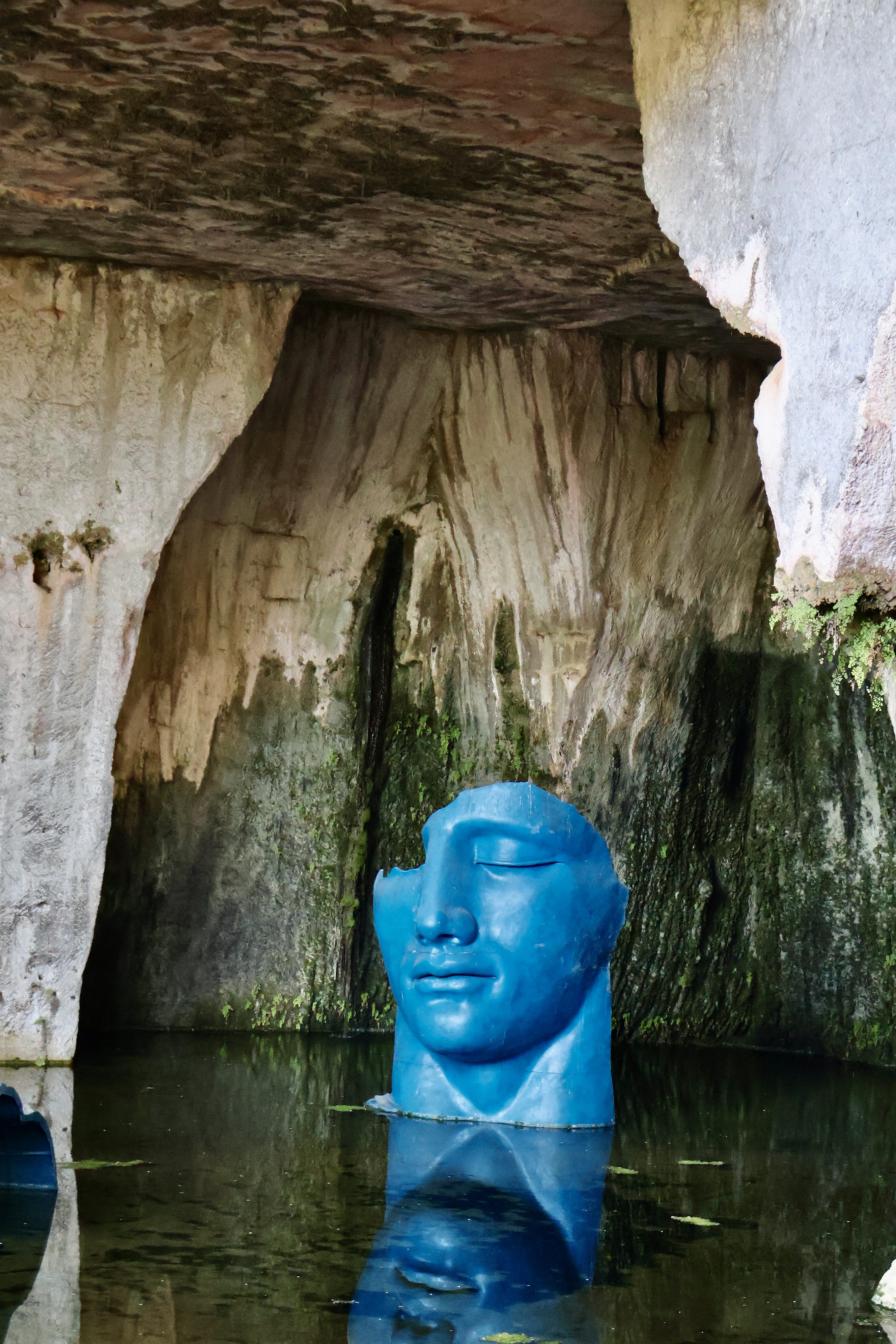
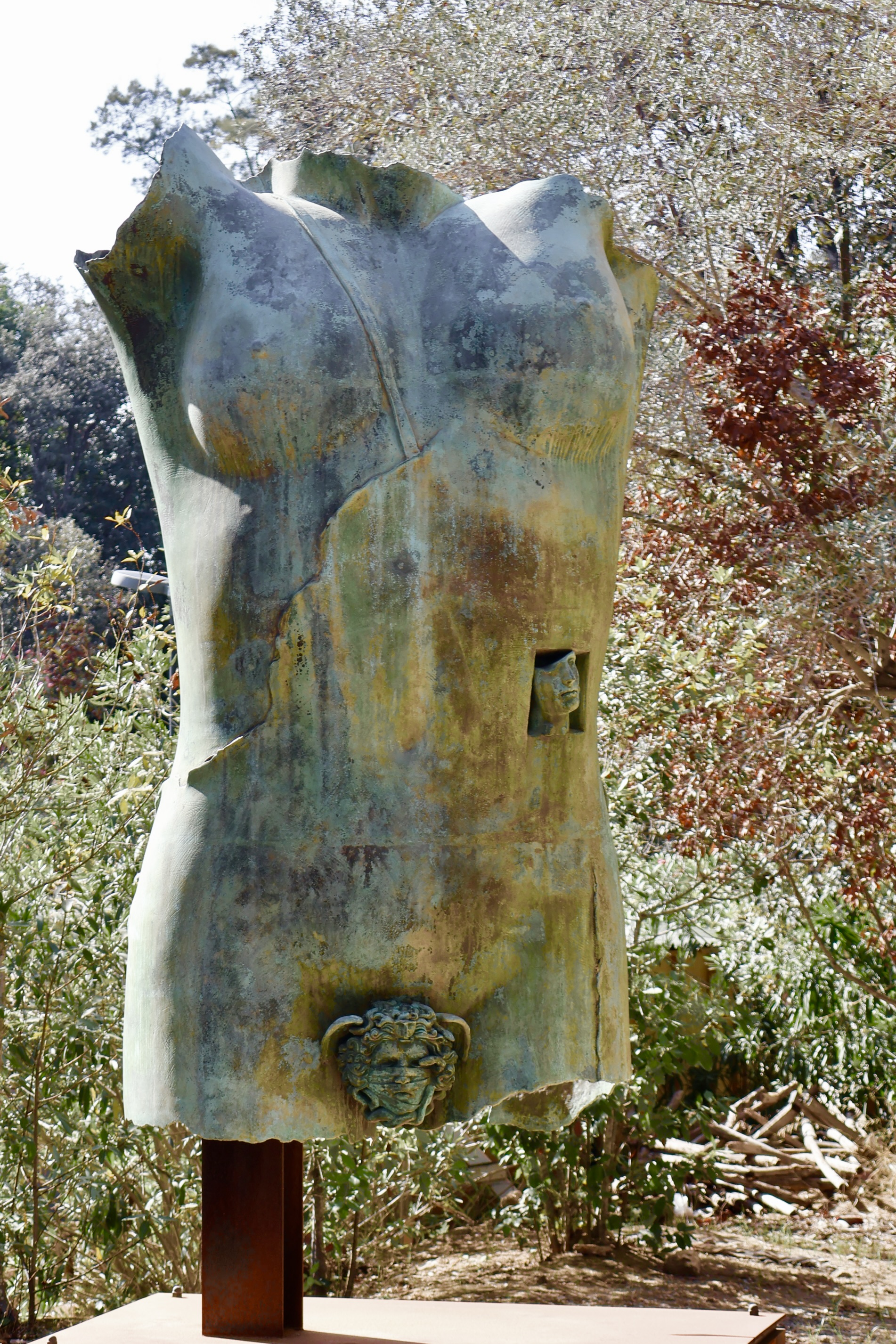
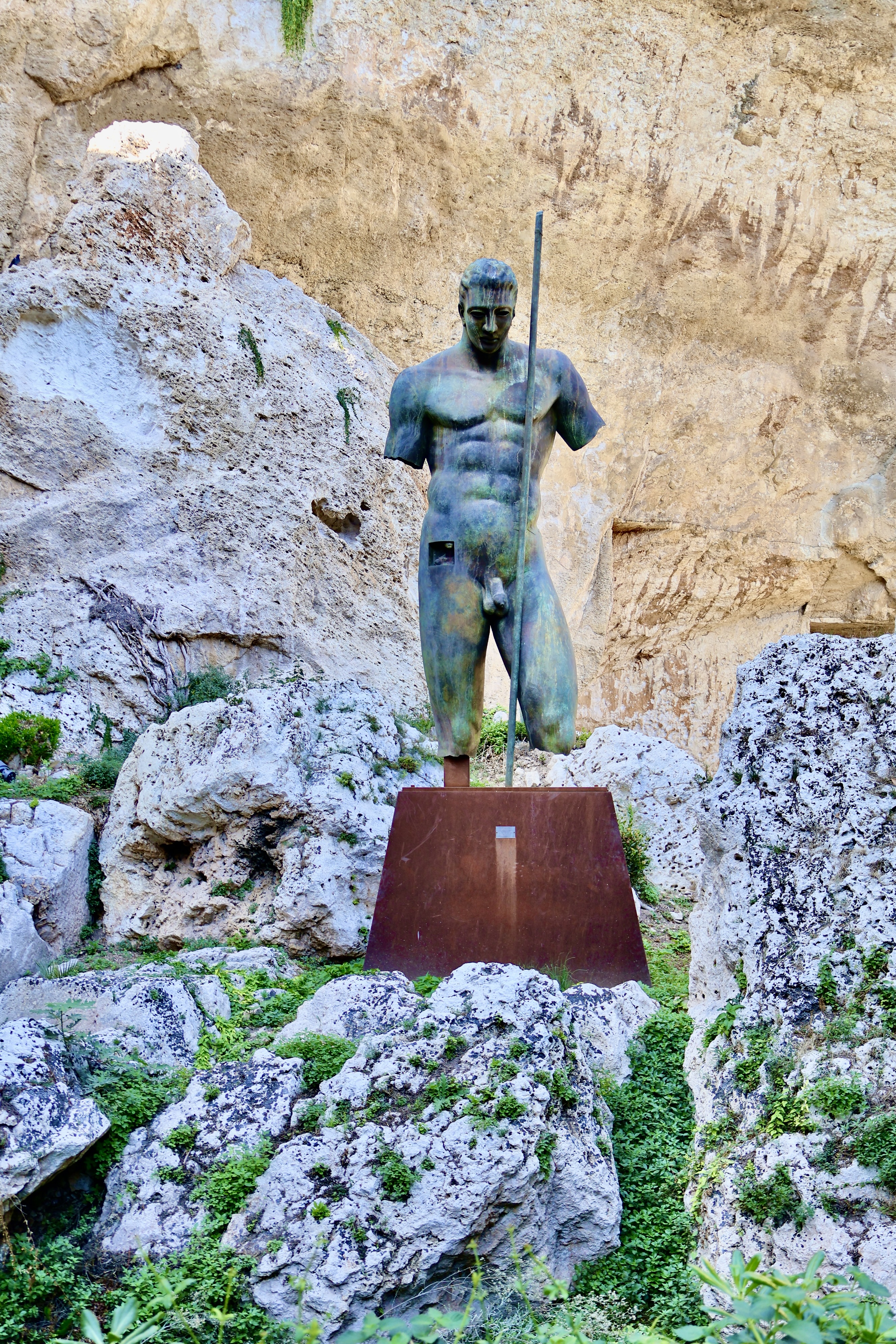
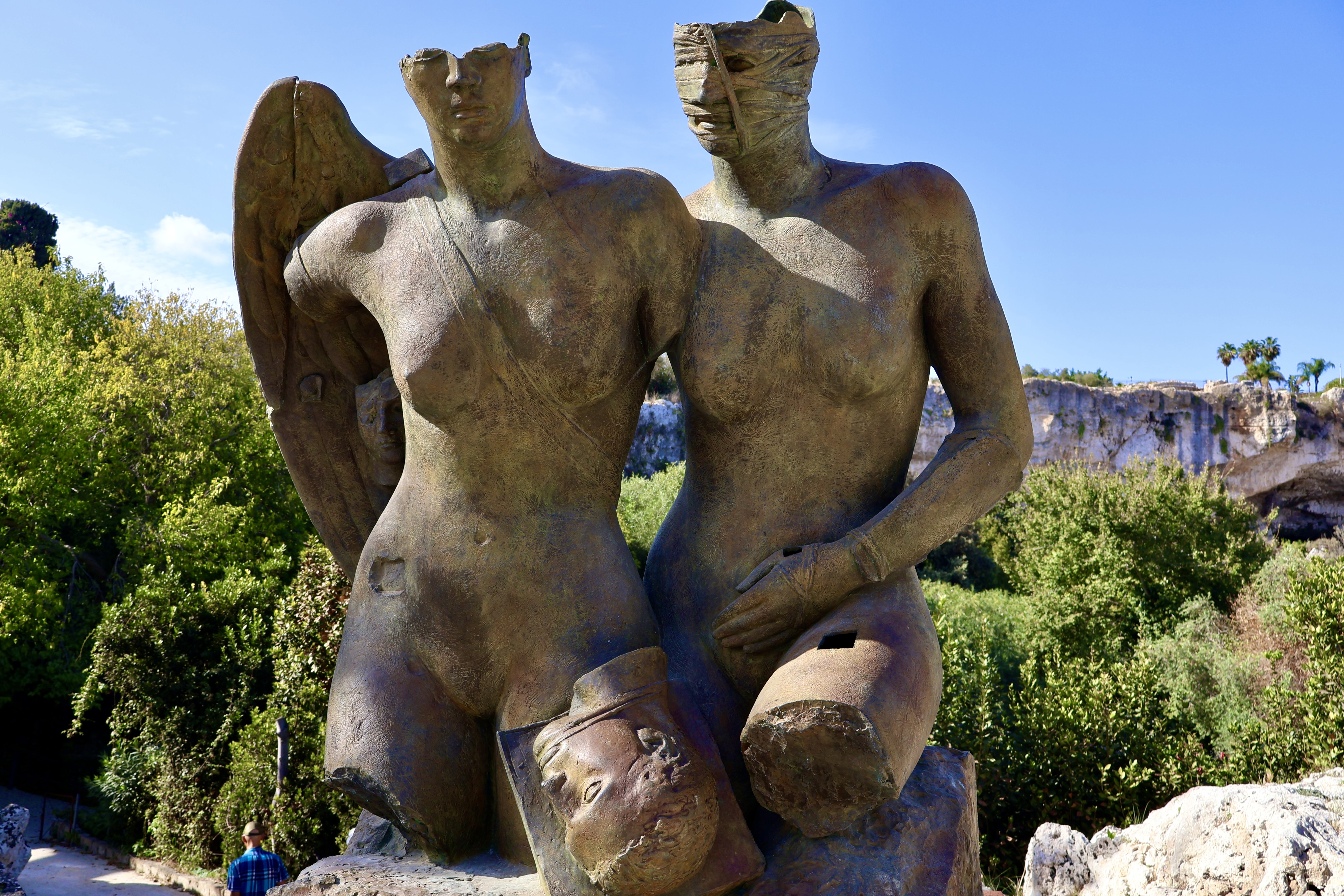
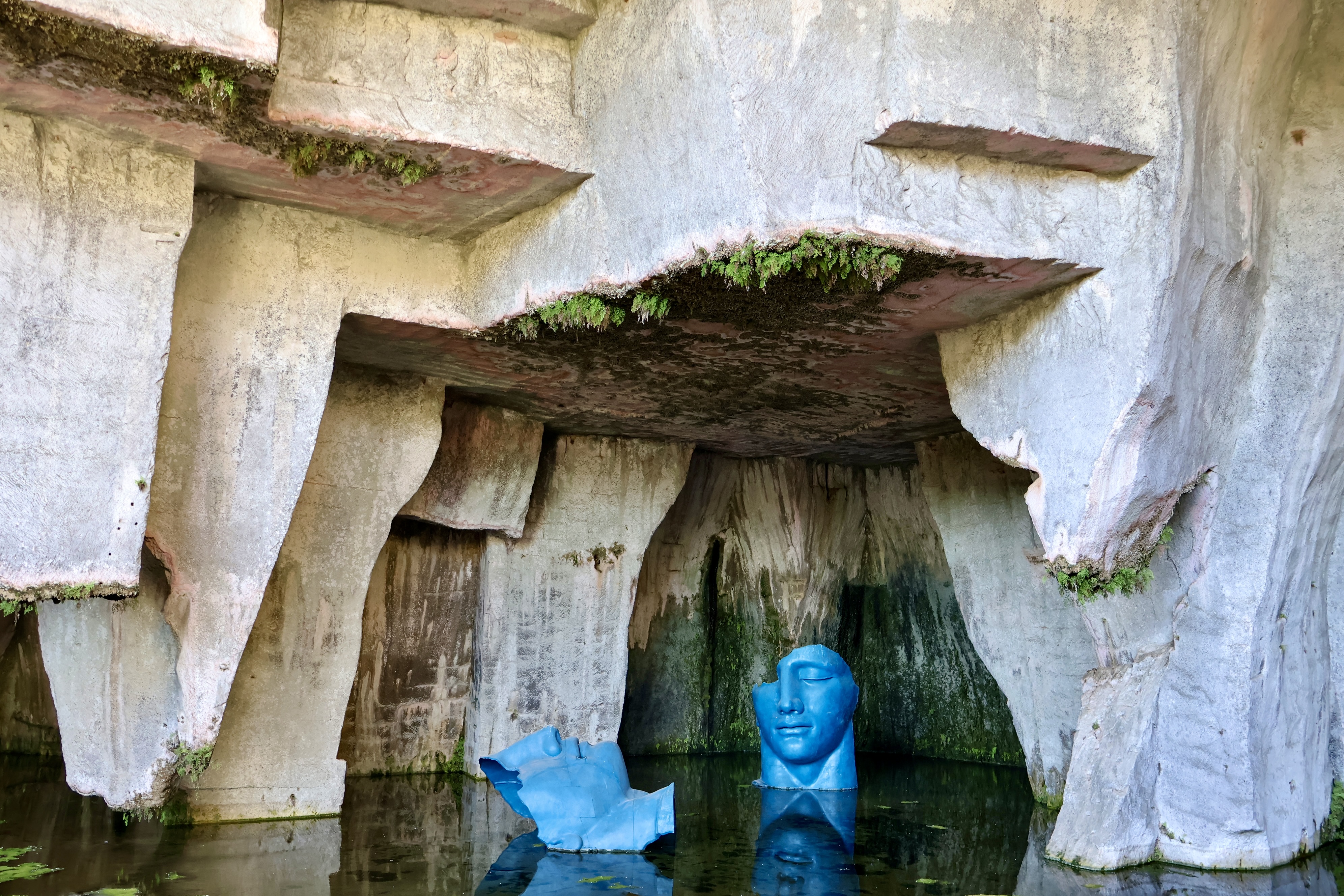
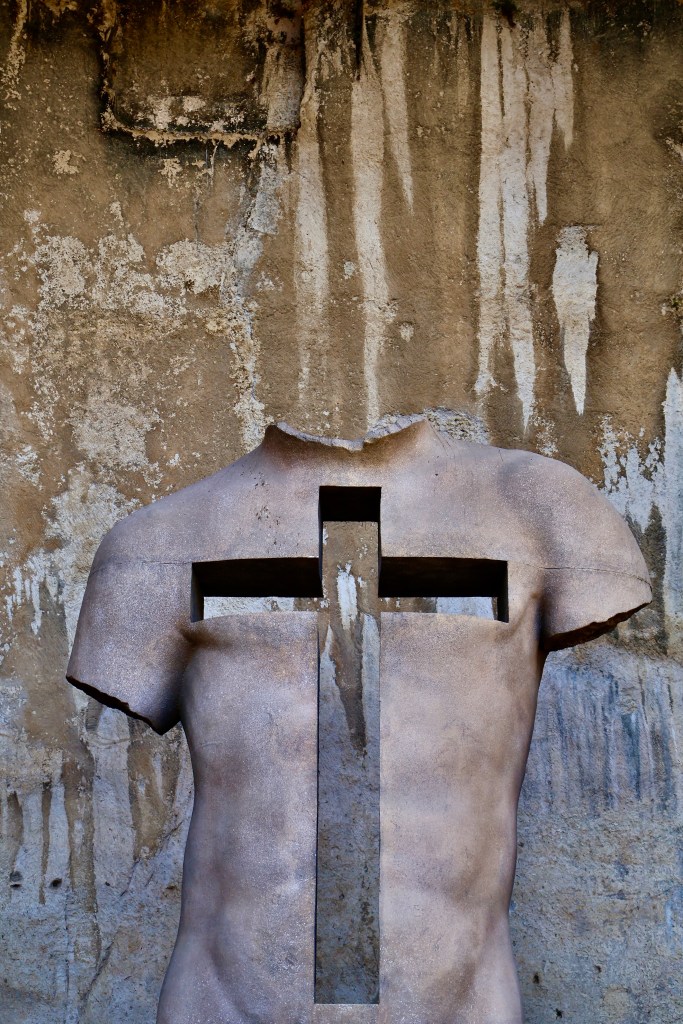
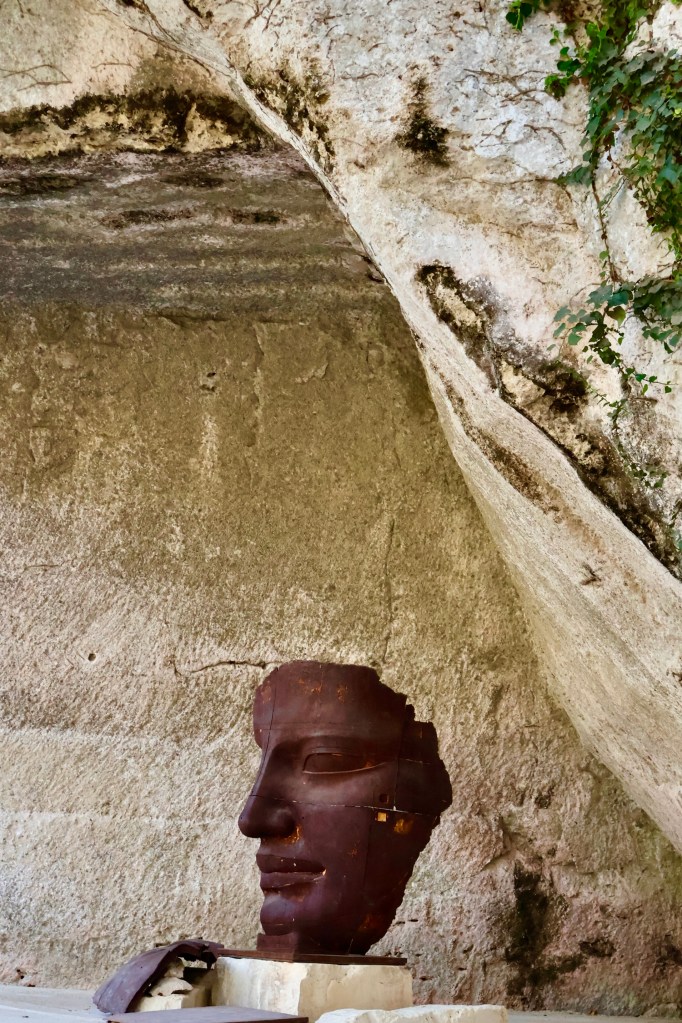
Throughout the park we viewed huge (from a creative, emotional and size standpoint) sculptures. We learned that these beautiful works of art are a temporary exhibit, billed as “Polish artist Igor Mitoraj’s largest open-air sculptural exhibition, titled “LO SGUARDO – Humanitas – Physis.” What a treat!
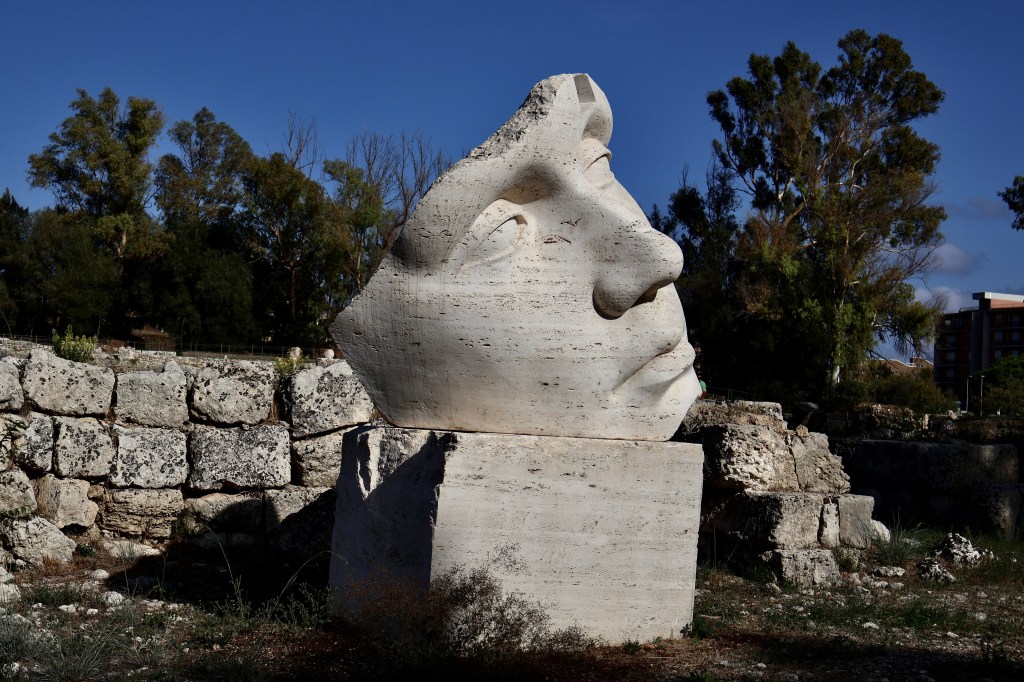
In the park, not far from the Greek Amphitheater, a series of grottos and caves exist. These were created when prisoners worked the area as a massive stone quarry. In one of his Verrine orations, Cicero praised the beauty of the quarries. While true, I found it hard to forget this beauty was constructed on the backs of enslaved humans. In a healing gesture, a lovely area with citrus, agave and other trees has been planted and nurtured in the area. The sculpture exhibit emphasized the dichotomy.


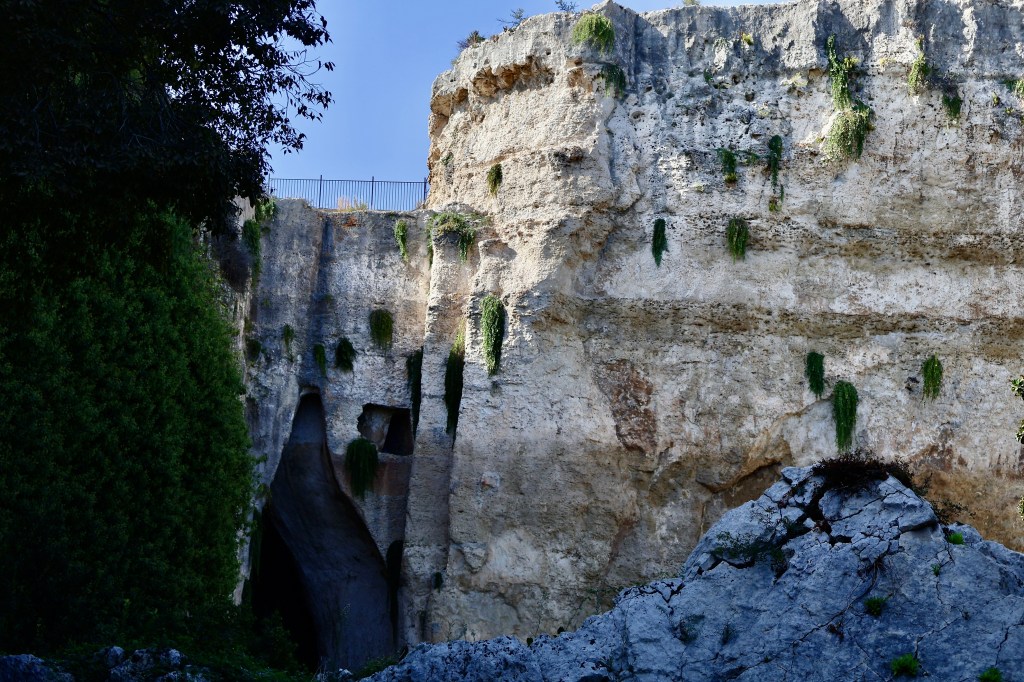
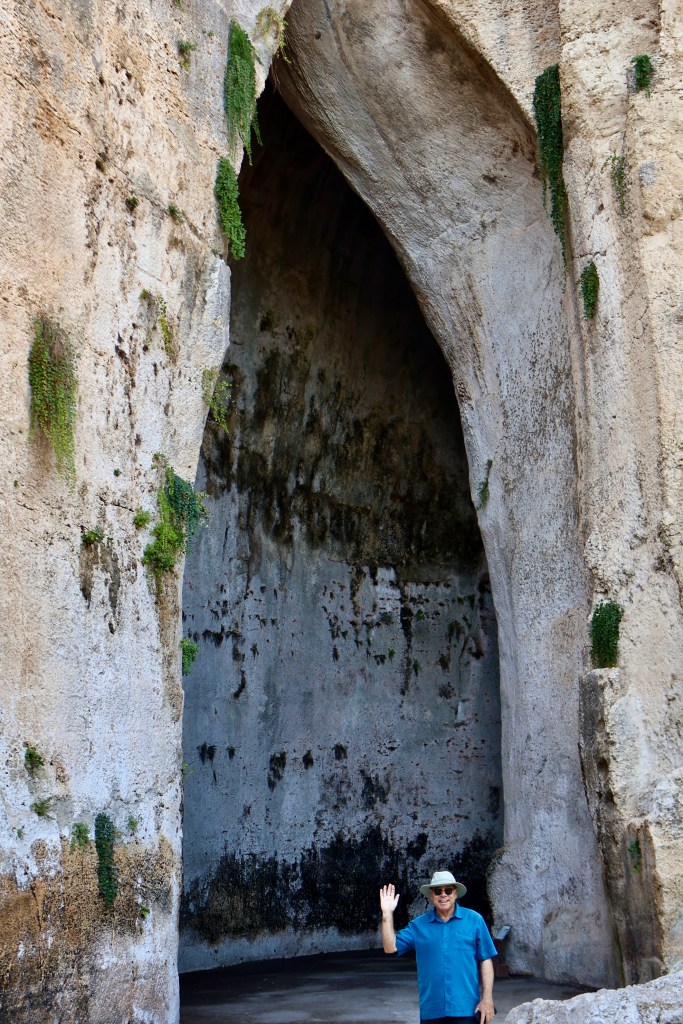
A few more photos from Archeological Park


 Geezer On The Go
Leave a reply to mncfoster@comcast.net Cancel reply