
Belgium and The Netherlands were once unified as The United Kingdom of the Netherlands. For multiple reasons, Belgium revolted and gained independence in ~1830. Belgium is now bordered by the North Sea, The Netherlands, France, and Germany, and has three 3 primary languages; Dutch, Flemish, and French. Movements to create a single national language have failed.
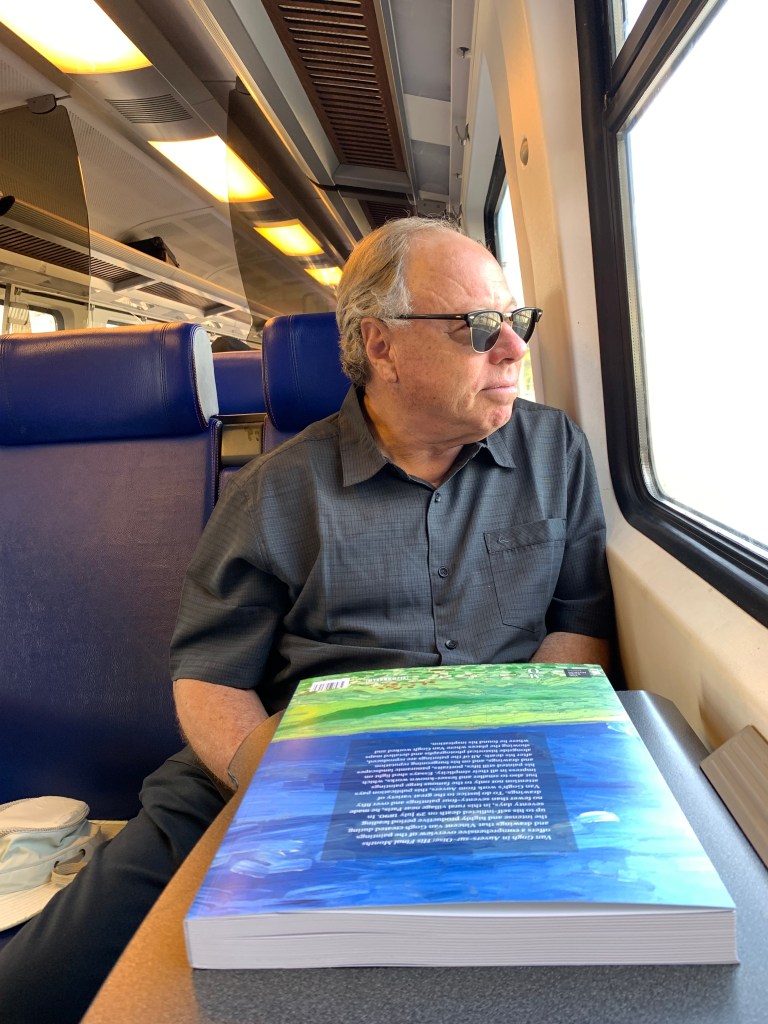
Travel between the Netherlands and Belgium is super easy and affordable. We boarded a train from Amsterdam and headed SW to visit two wonderful Belgium cities: Ghent and Bruges.
Ghent
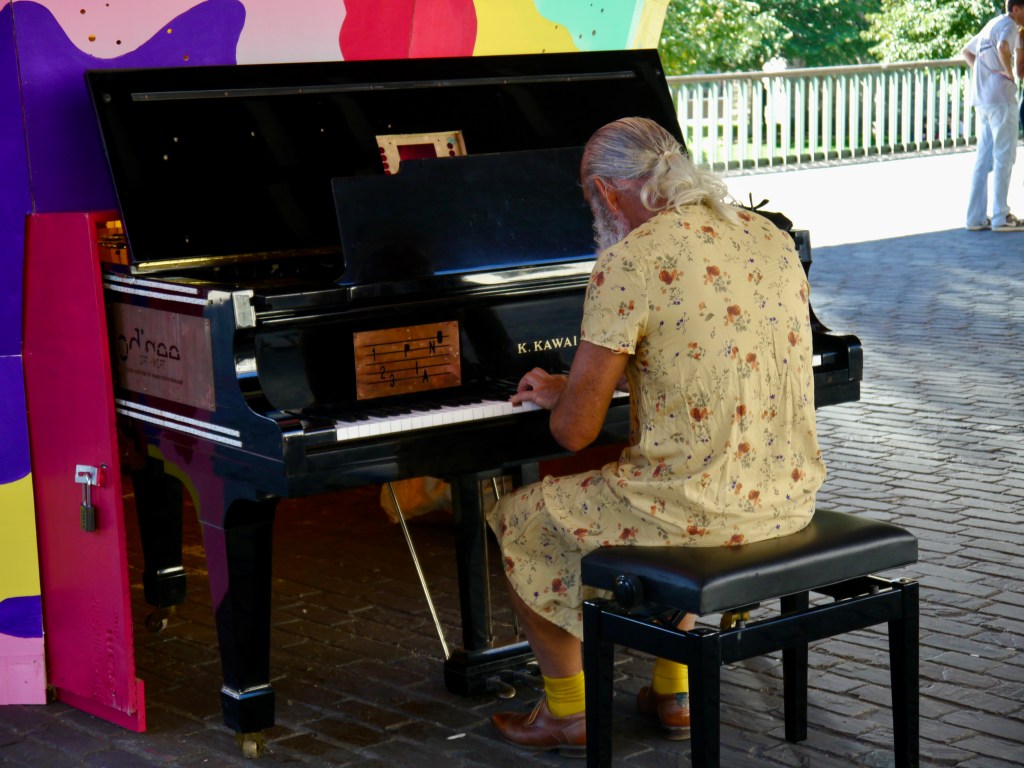
Ghent has a little bit of everything to offer, including street music.

The Treaty of Ghent (spoiler alert — it was negotiated in Ghent) ended the War of 1812 between the United States and Great Britain. After four months of talks, the treaty was signed on December 24, 1814. The US Senate unanimously ratified the Treaty of Ghent on February 16, 1815. American peace commissioners participating in negotiations included John Quincy Adams, Henry Clay, Albert Gallatin, James A. Bayard, Sr., and Jonathan Russell.
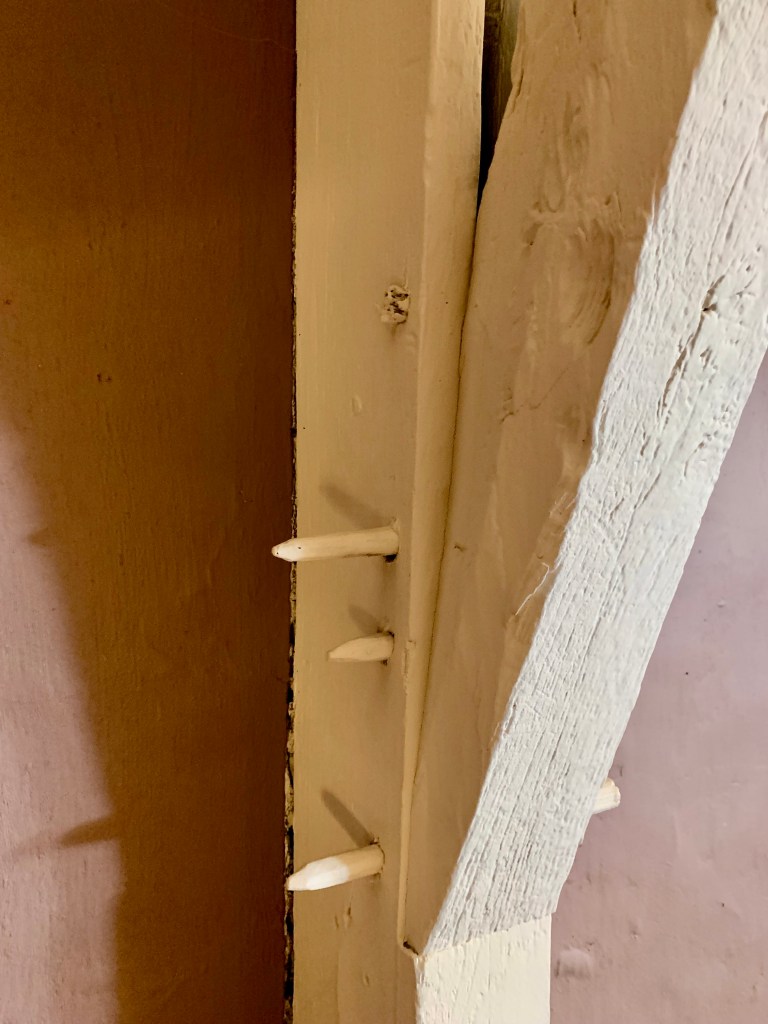
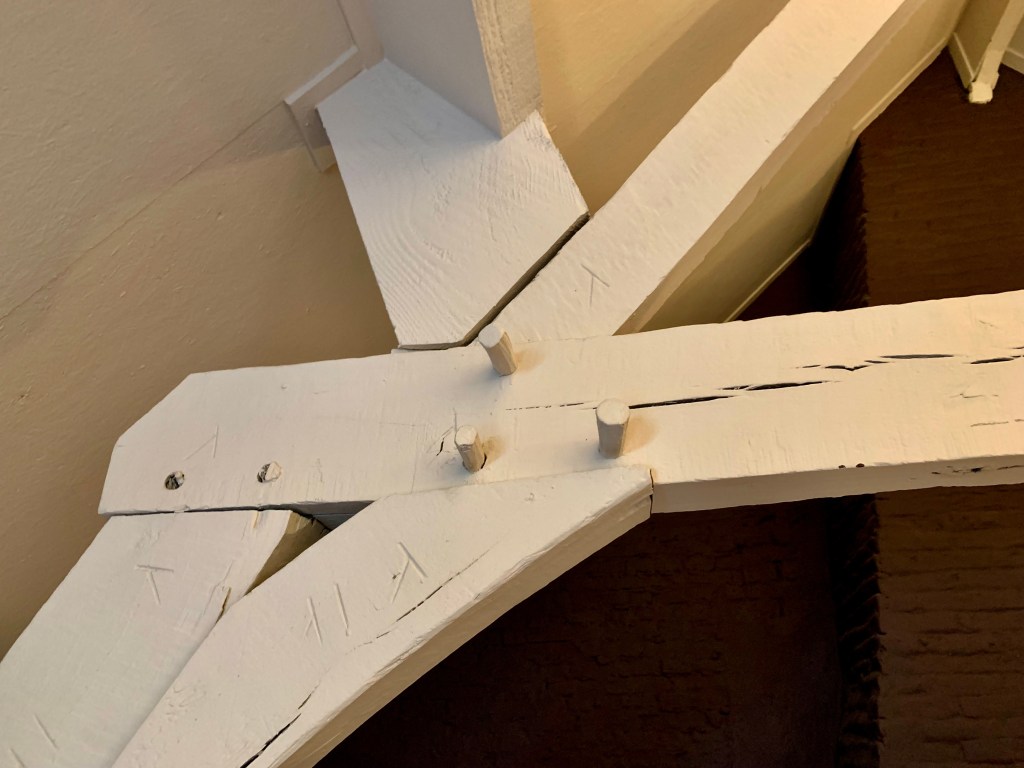
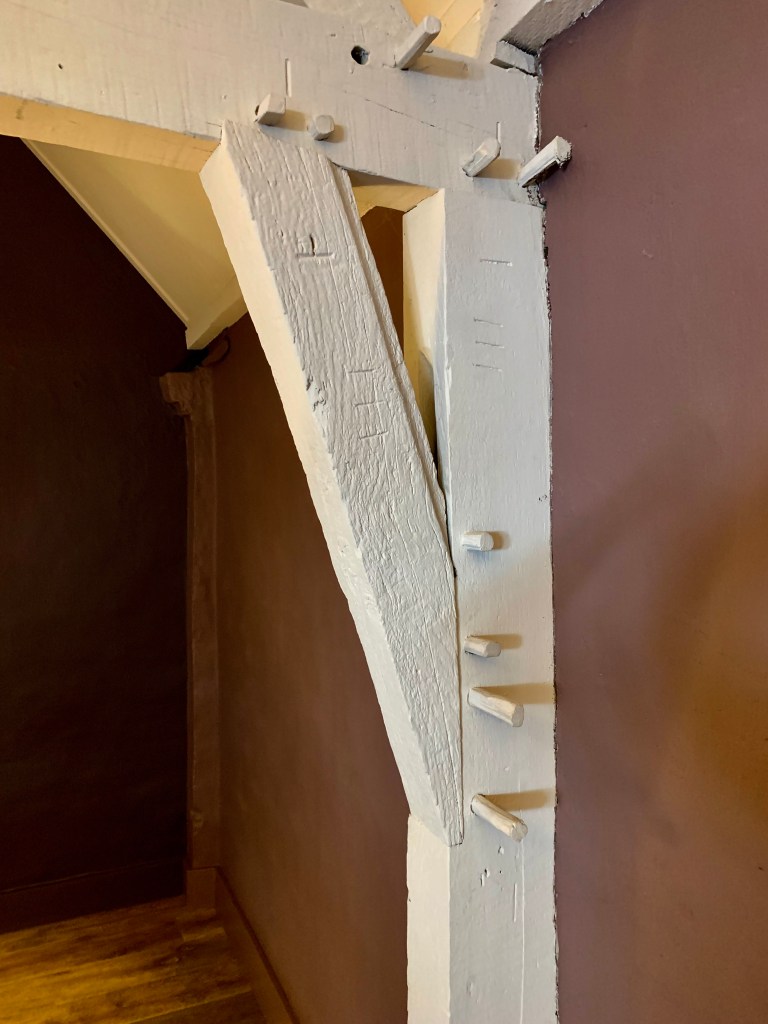
We opted for a 3-night stay in an 18th Century Manor, converted to a small hotel. The Ganda Rooms & Suites is near the the city’s gothic region. Our attic room was comfy, albeit a bit dark. The original beams are exposed, fastened by sharpened wooden pegs, both interesting and utilitarian, doubling as clothes hooks. I have to admit, I imagined the damage those stakes could cause with a misplaced stumble.
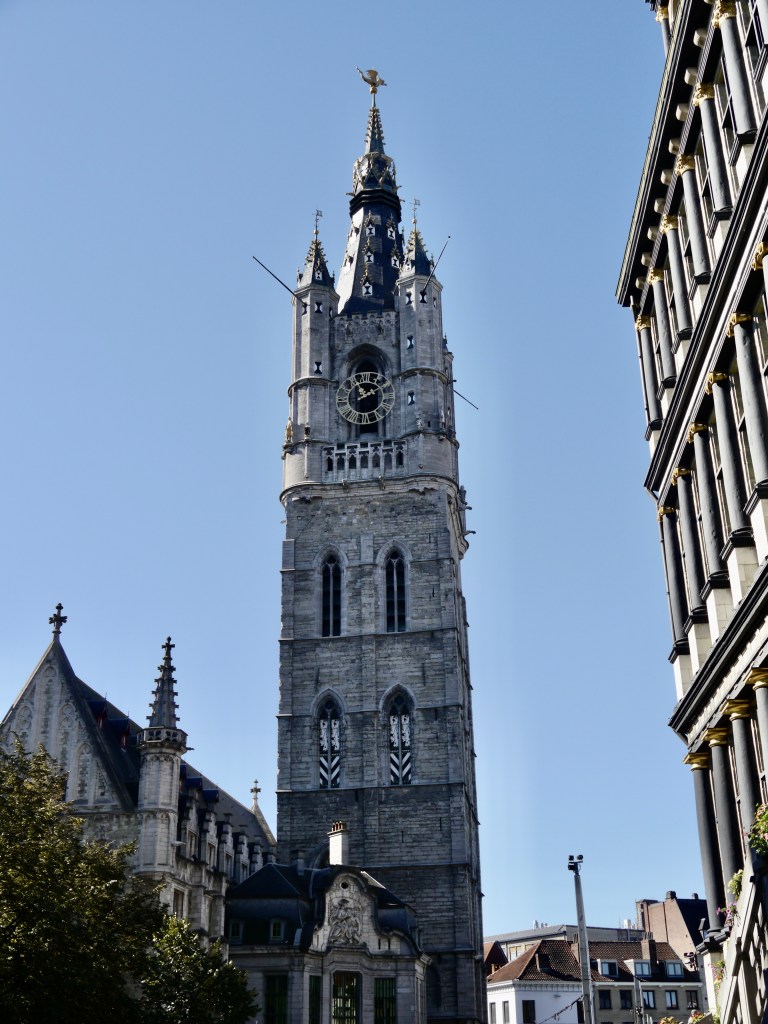
One of 3 medieval towers overlooking Ghent, The Belfry of Ghent is an UNESCO World Heritage site. It claims title as the tallest belfry in Belgium. Construction started in 1313 and ended in 1380. A gilded dragon from Bruges tops the tower. Inside the belfry, an alarm bell called “Roland” (Anglicized from Roeland) was installed in 1325. Thereafter, it was used to toll the hours and to warn citizens of an approaching enemy or battle victory.
Till the bell of Ghent responded o’er lagoon and dike of sand,
Henry Wadsworth Longfellow
I am Roland! I am Roland! there is victory in the land!
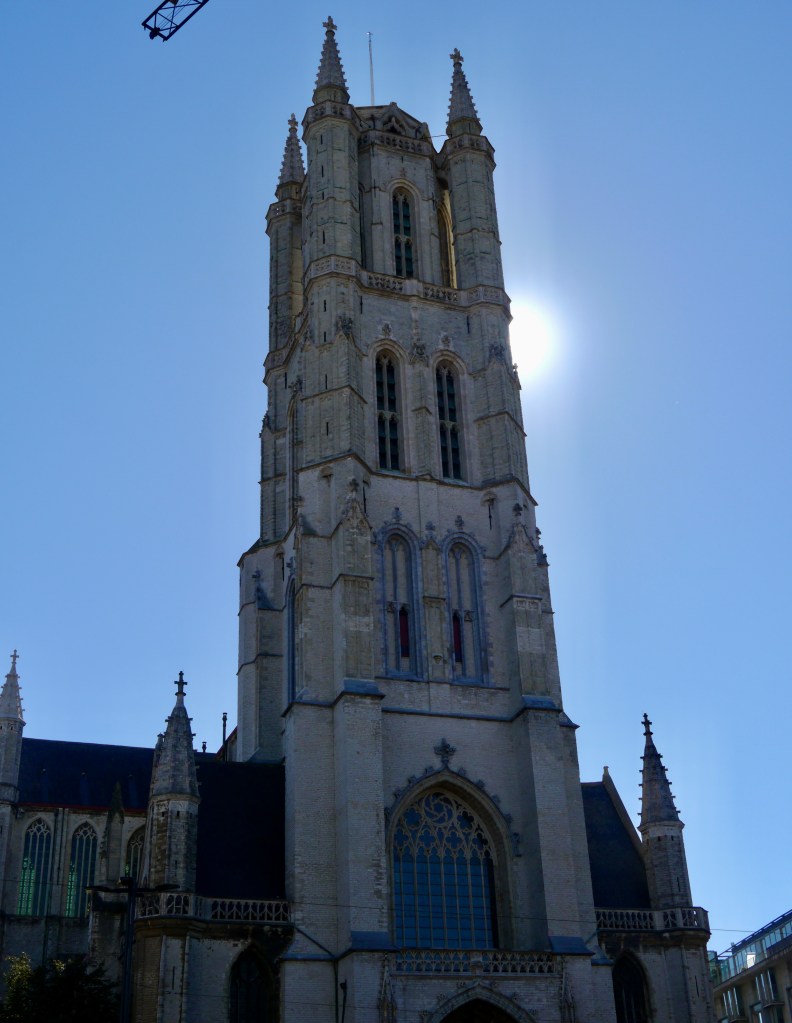
When the Diocese of Ghent was founded in 1559, St. Bravos Cathedral was anointed as the diocese’s cathedral. St. Bravos houses what is considered the brothers Van Eyck’s major masterpiece. Adoration of the Mystic Lamb is on display to the public. A large polyptych, it is considered among the most important works of early Northern Renaissance art. The piece was disassembled with some panels taken by Napoleon and others by German occupied forces in WWII. The infamous Monument Men were instrumental in bringing almost all the panels together. Only one of the original 12 was lost. The tour of Mystic Lamb includes an audio and 3D artificial reality goggles. I ditched the goggles but appreciated the audio. The entire cathedral is opulently endowed.
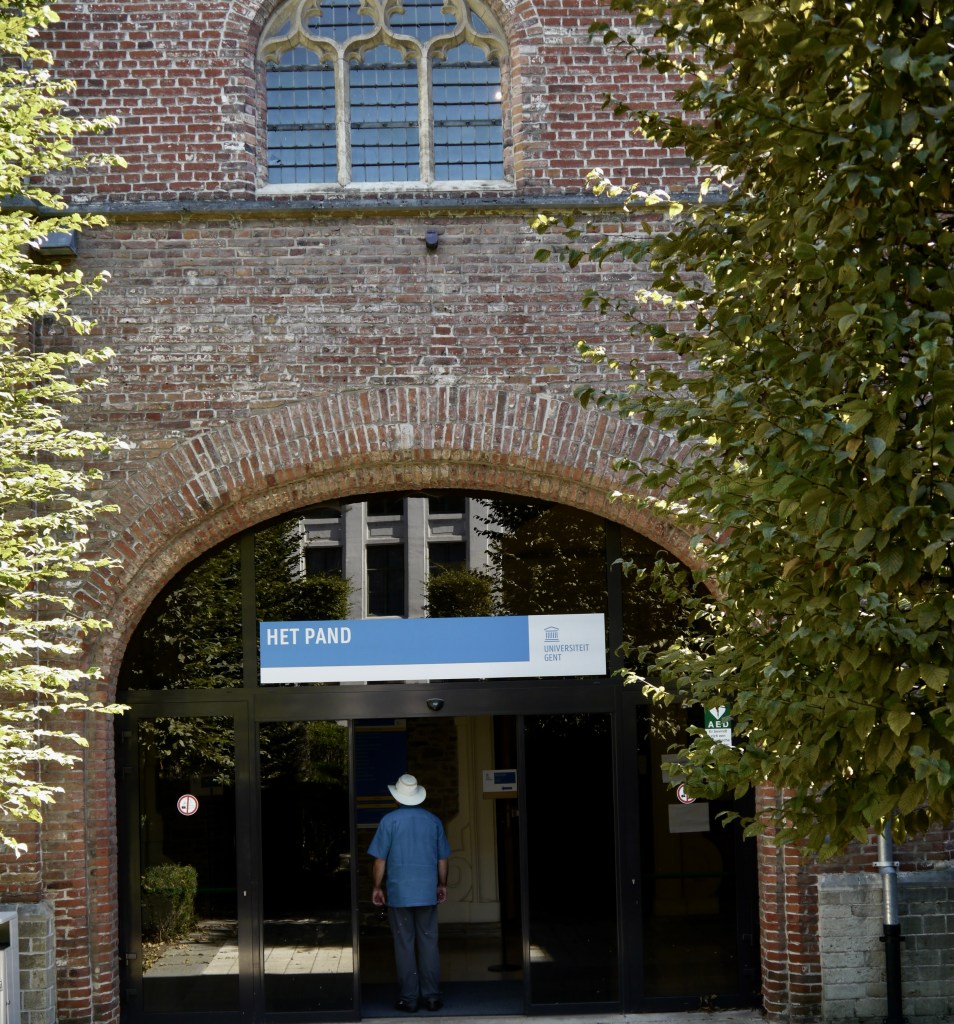

Ghent is a university city. The University has ~50,000 students and a perceptible impact on the area. The above photo is of Het Pand, a former Dominican Friary, now owned by the university and utilized for multiple purposes. The rear of the building borders a lovely canal.
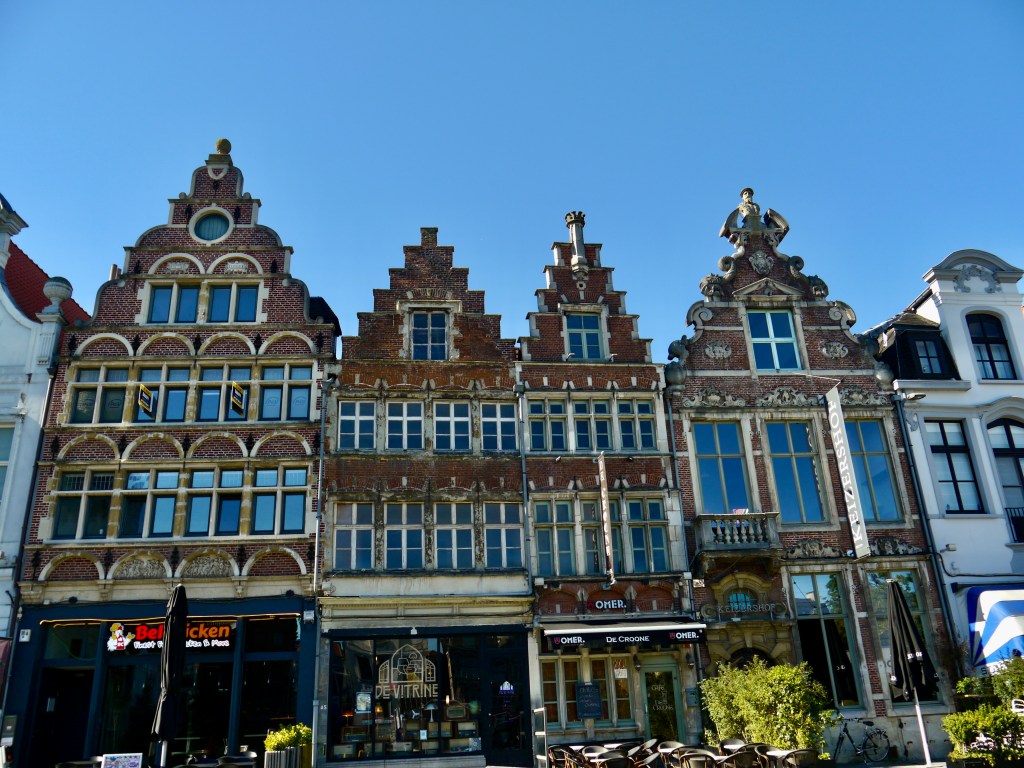
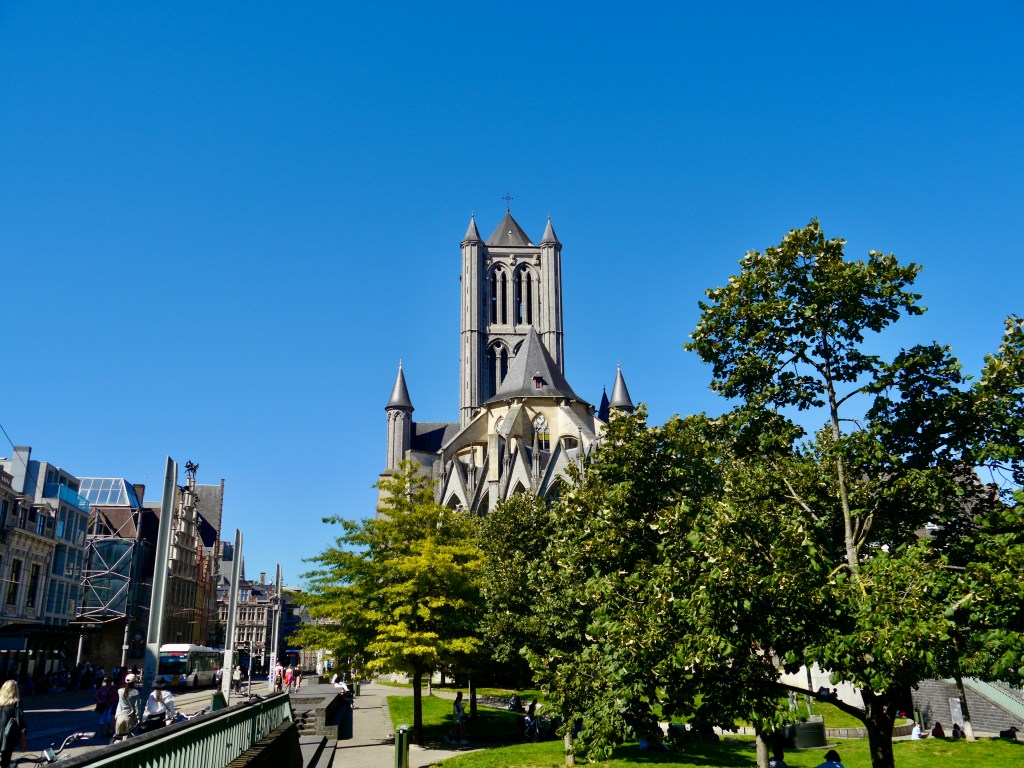
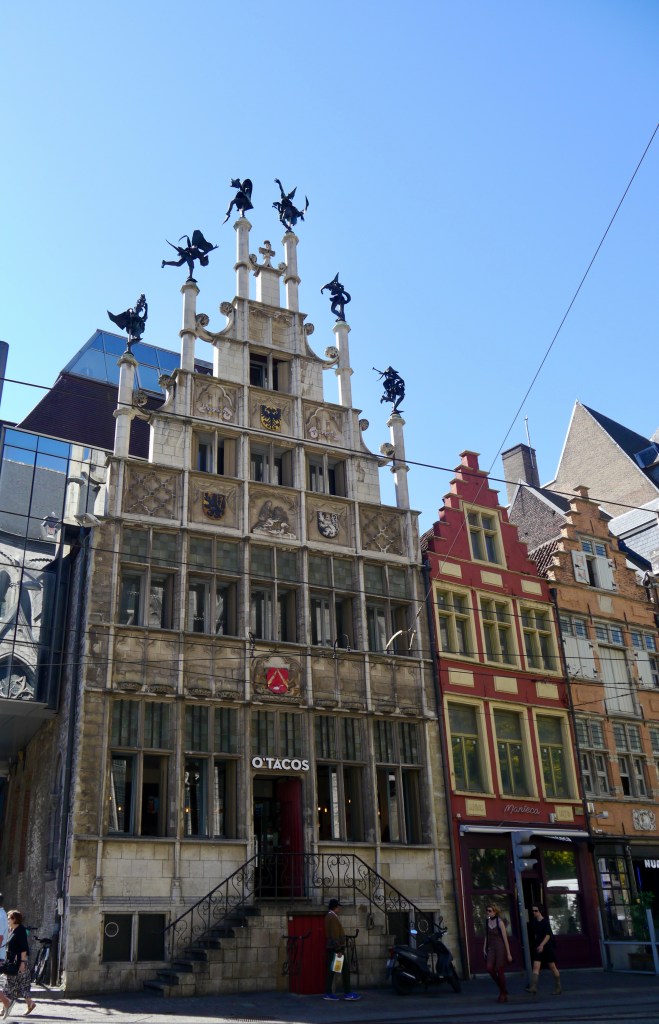
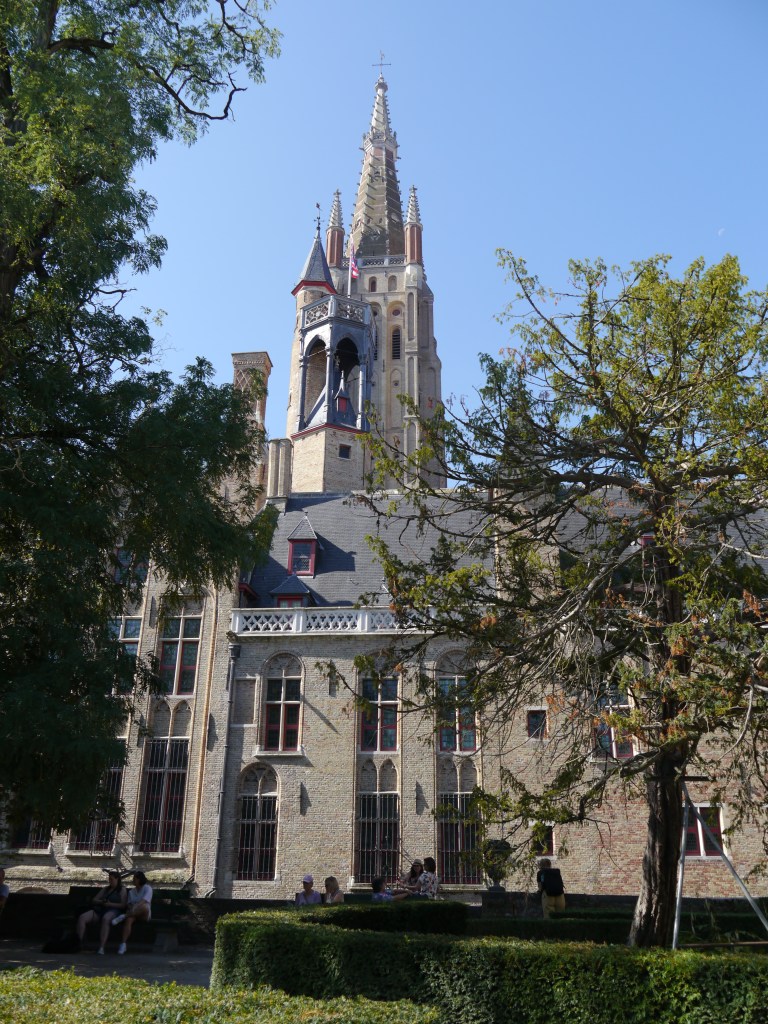
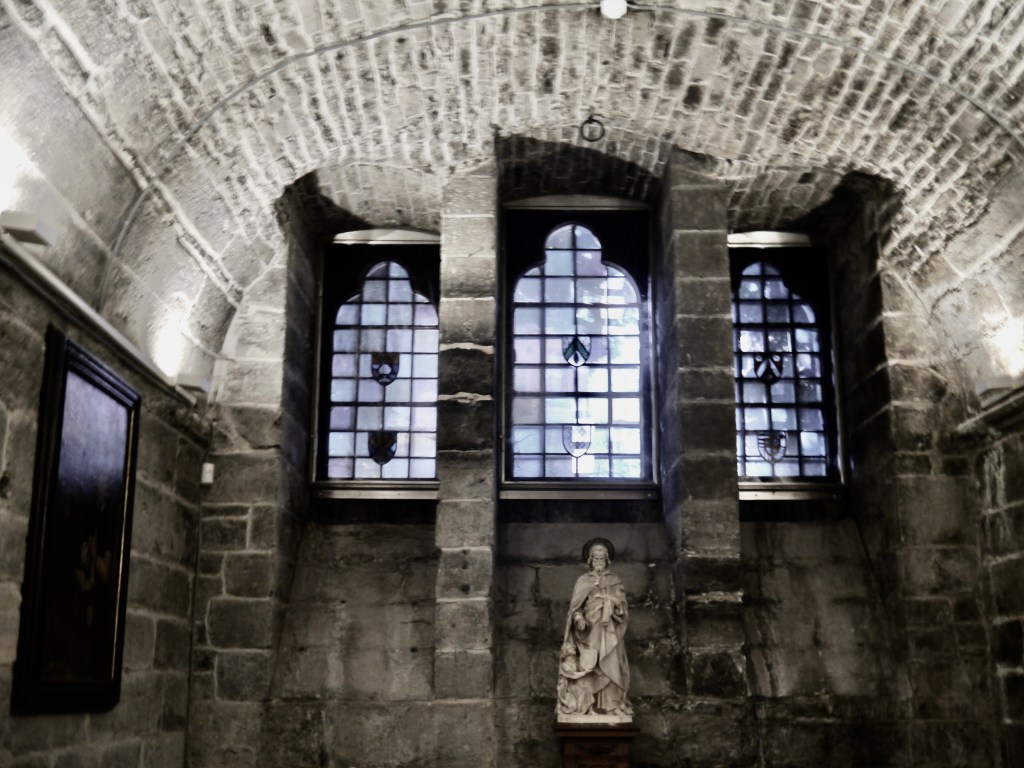
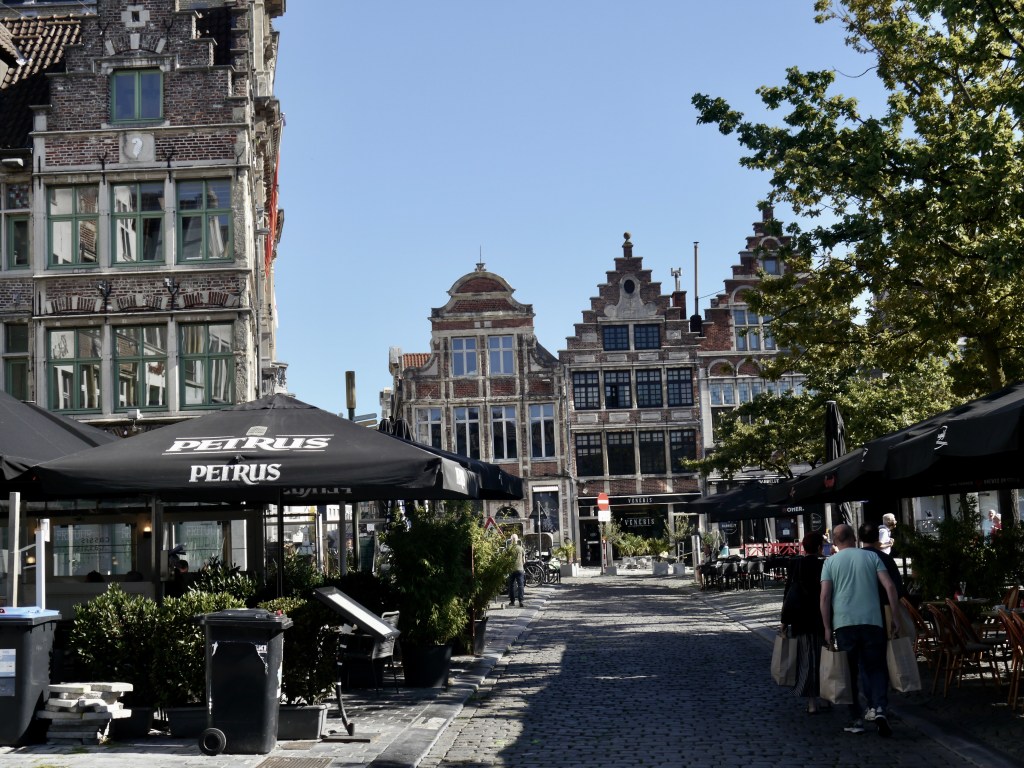
Above are some run-of-the-mill views in the city
Beer
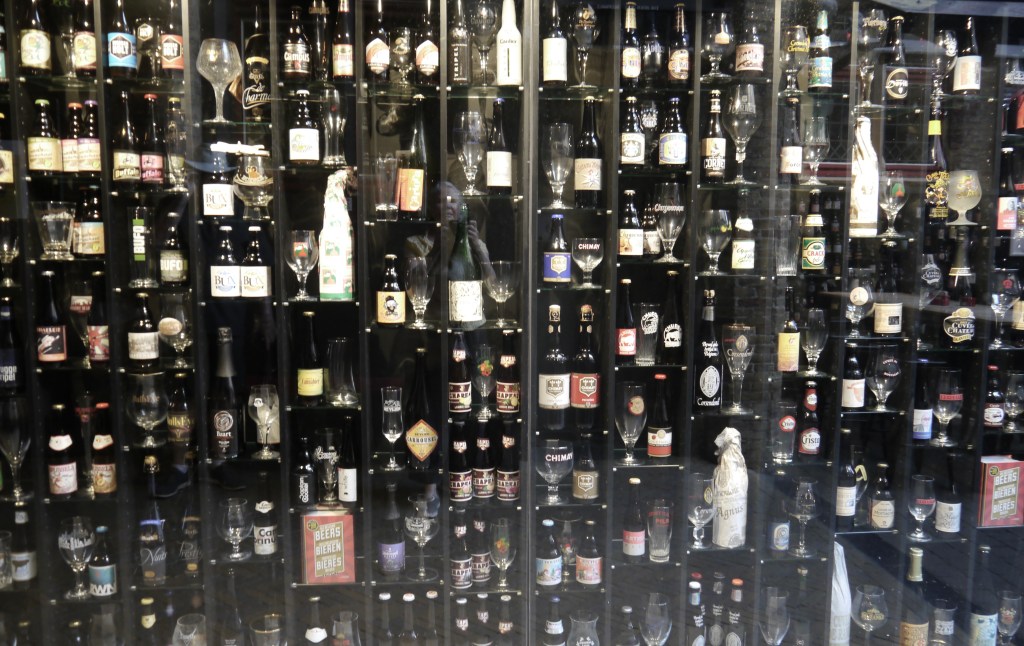
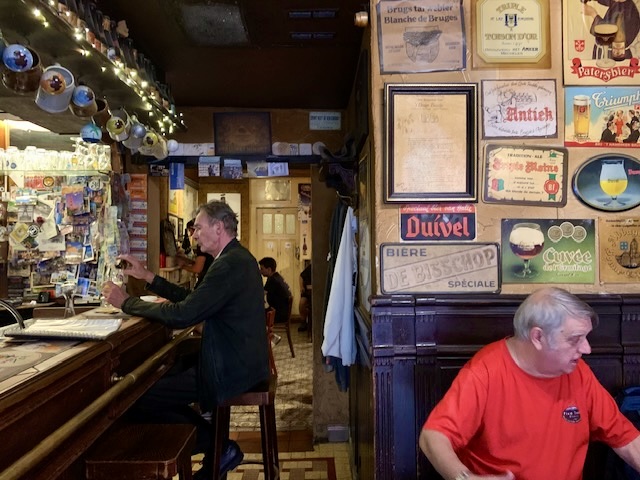

Great beer pubs abound (according to Conde) in both the Netherlands and Belgium. Most beers are bottled and served in glassware specified for the brand. One evening, after visiting a local pub, Conde returned to the hotel and shared a story. The pub he visited is frequented by college students. Apparently, the more elaborate glassware has been victim to sticky fingers. To nip that problem in the bud, the bar devised a rule. They installed a basket, connected by a pulley system, to the ceiling. When ordering a brew served in one of the coveted glasses, a patron must remove their left shoe and put it in the basket to be hoisted out of reach. Once the glass is returned, the basket is lowered and the patron gets their shoe back. Gotta love human ingenuity.
Bruges
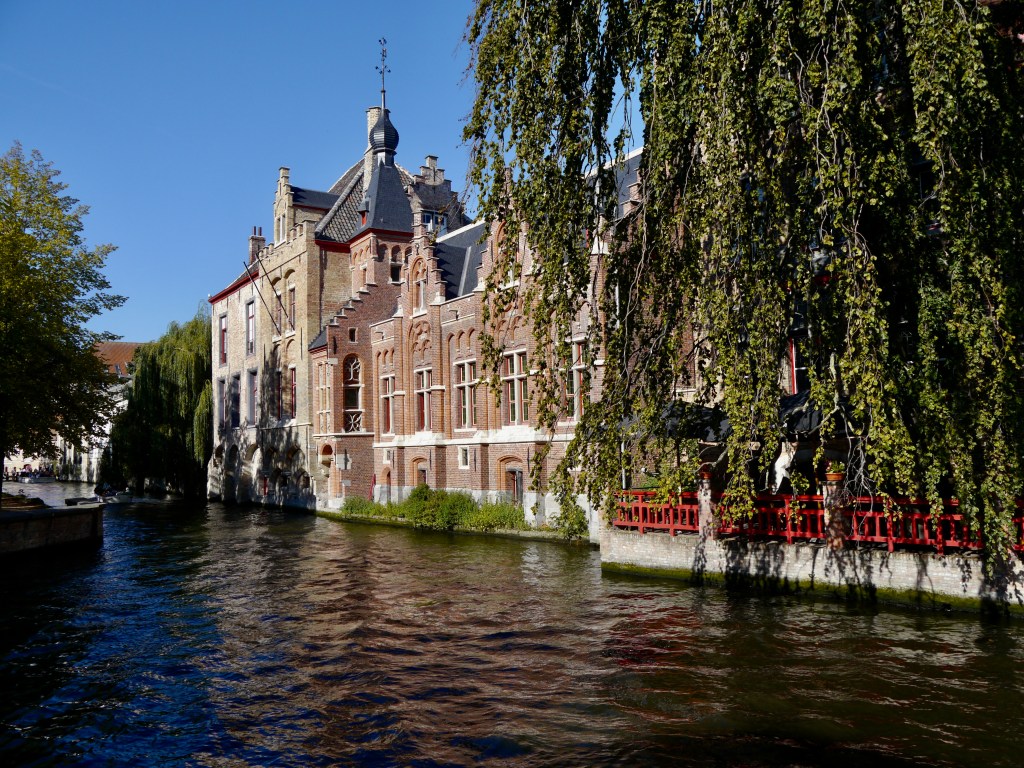
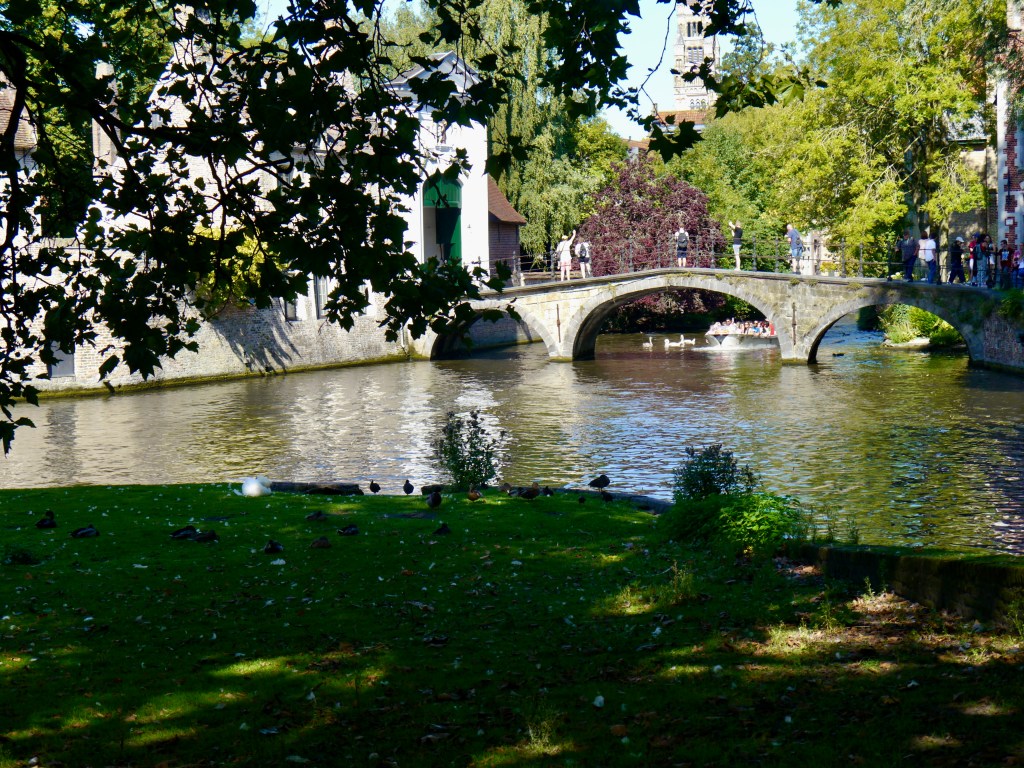
Bruges, the capital of West Flanders, supports a system of canals spanned by quaint bridges with passageway to the North Sea. It is approximately 7 miles from the Belgium coast. Settled in ~1stC BC, the city experienced its heyday between 1200 – 1400 when trade across Europe thrived. Metals, fur and wine were some imports exchanged for a highly coveted type of local cloth. Many of Bruges’ towering gothic buildings were erected during that time frame, living on to inspire awe.
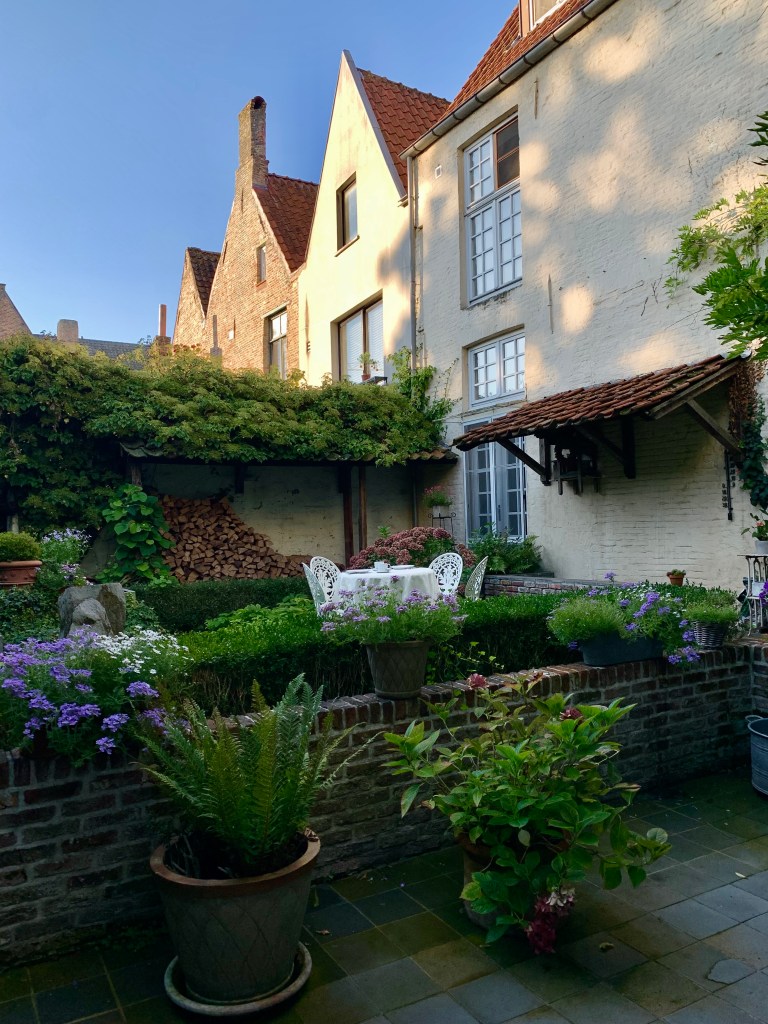
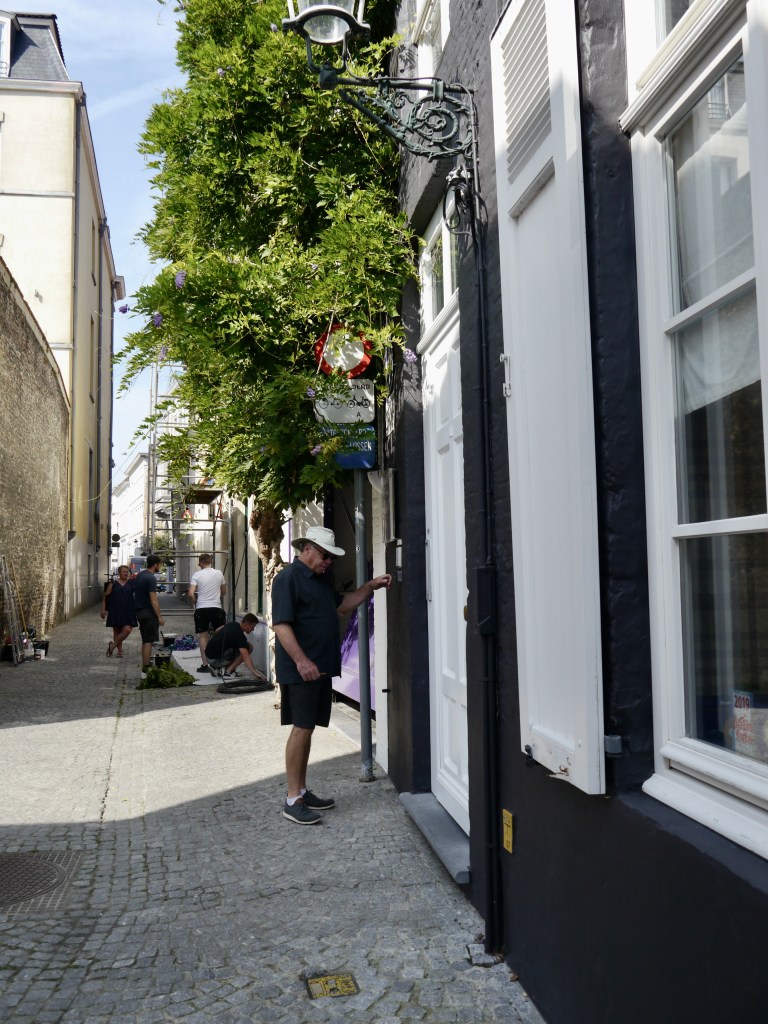
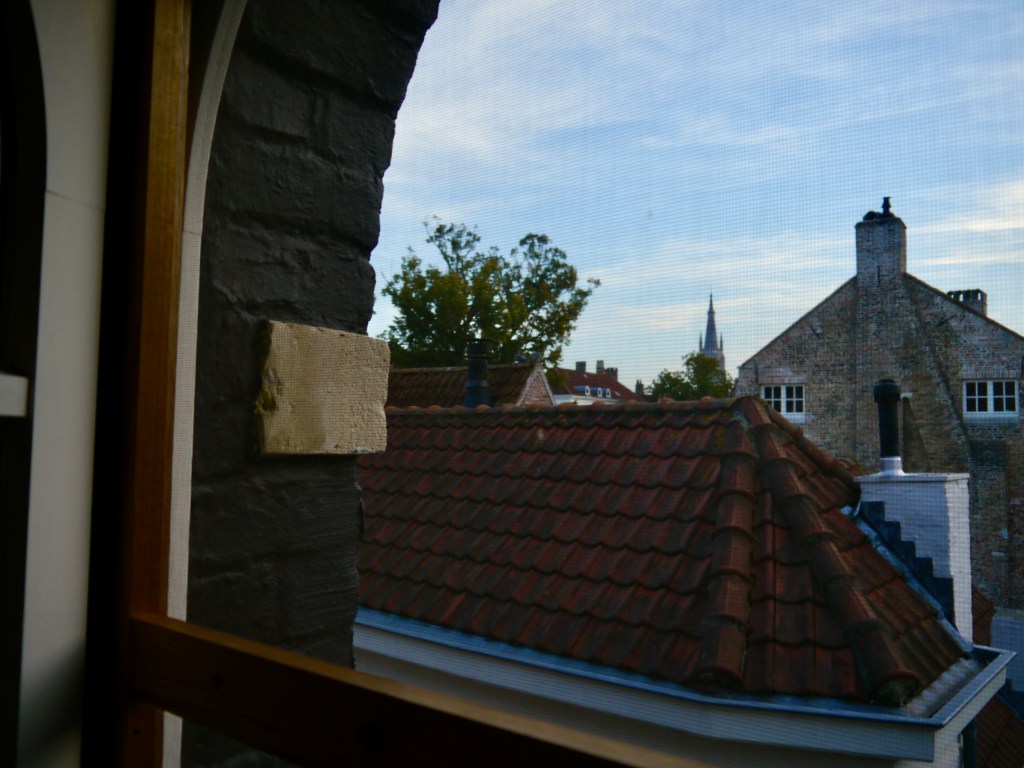
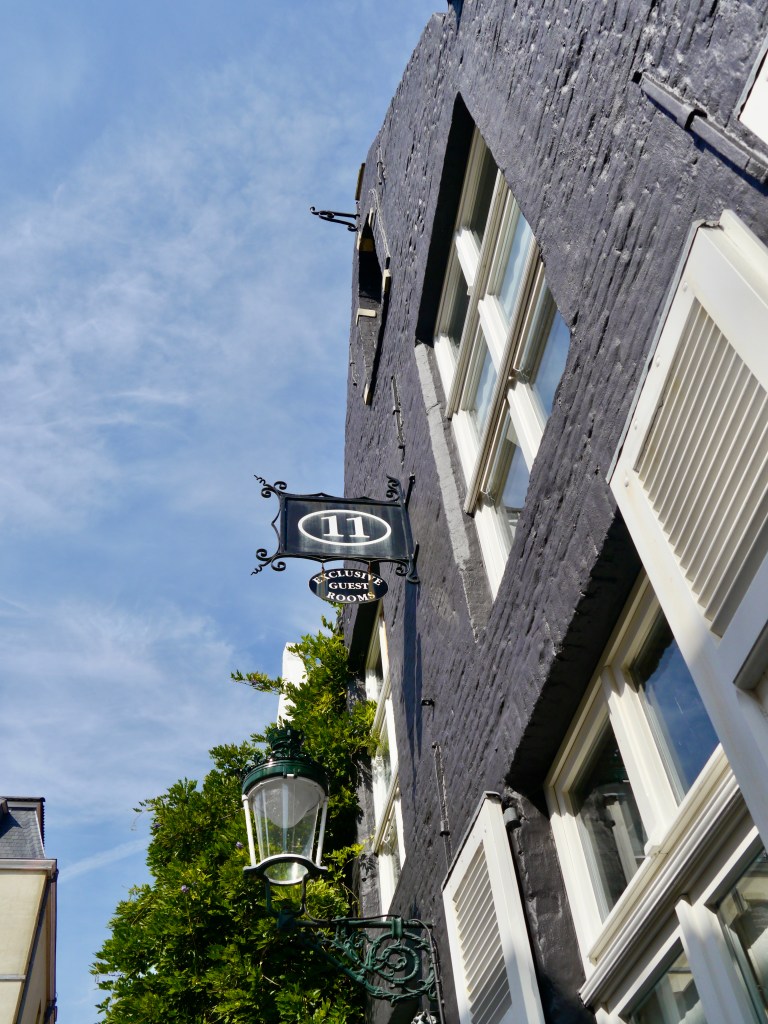
We stayed four nights in a small B&B on a quiet side street. No. 11 Bed & Breakfast was delightful. A comfortable communal sitting area and full breakfasts served in the back yard garden. Our room,”The Chocolate” room, is situated in a converted attic under the eaves. Great views and super comfy, (other than the unusual heatwave, which could not be controlled, in spite of my best efforts). The B&B was used as a film location for the quirky movie, In Bruges. Worth a gander.
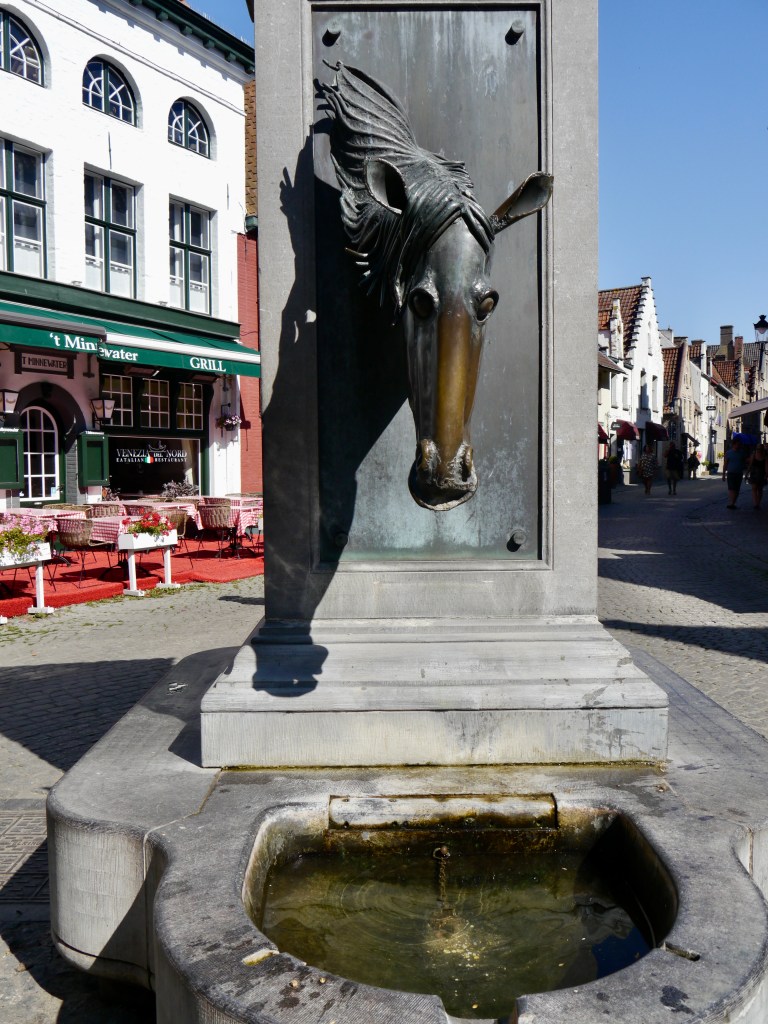
Bruges is super easy to navigate on foot or by. Definitely not a place for a car. The tourist crowds in the central area can be a bit frustrating, but not a problem if one exercises patience. Horse & buggy tours start and end in Market Square, as an option. We didn’t partake, but saw enough to figure it would probably be worth it. The horses are healthy and the drivers seemed knowledgeable. I love the horse head fountain, located in the historic region and still used to water horses.
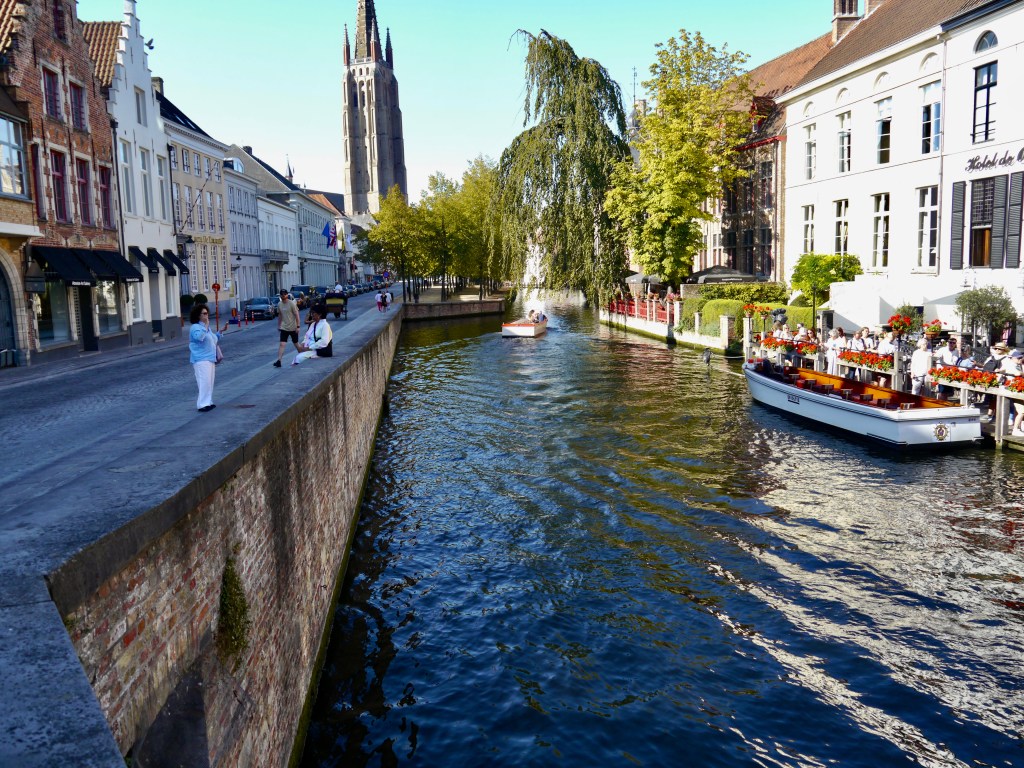
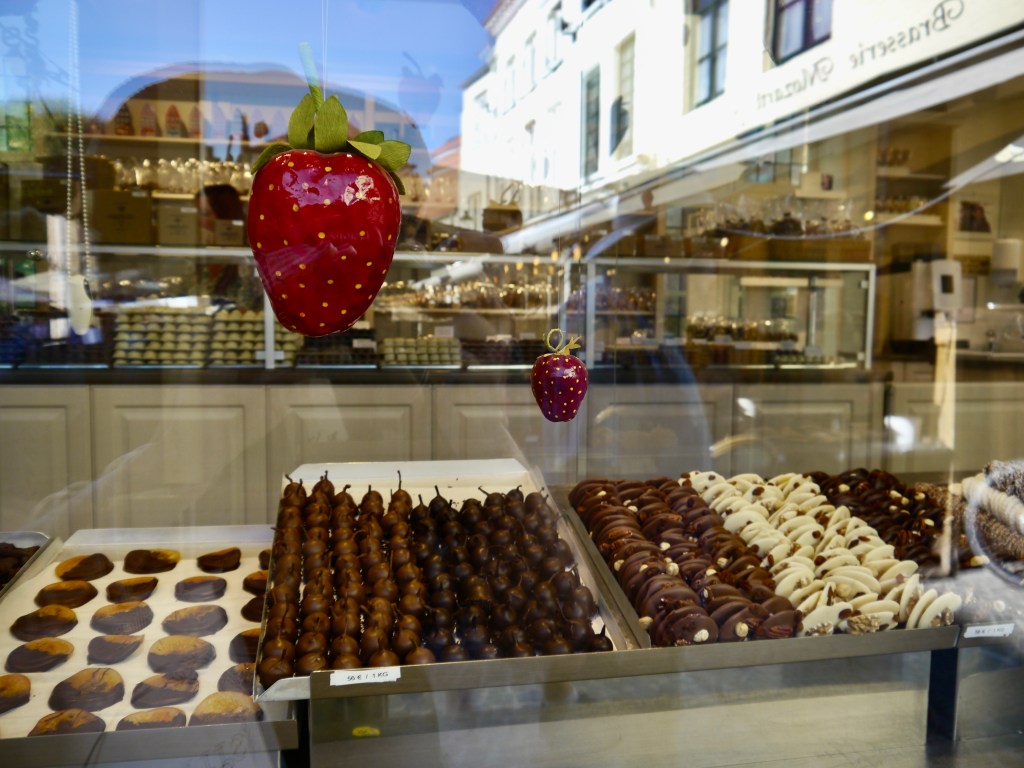
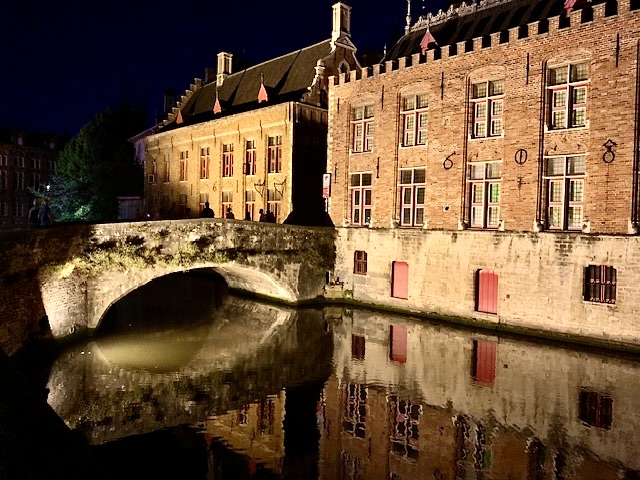
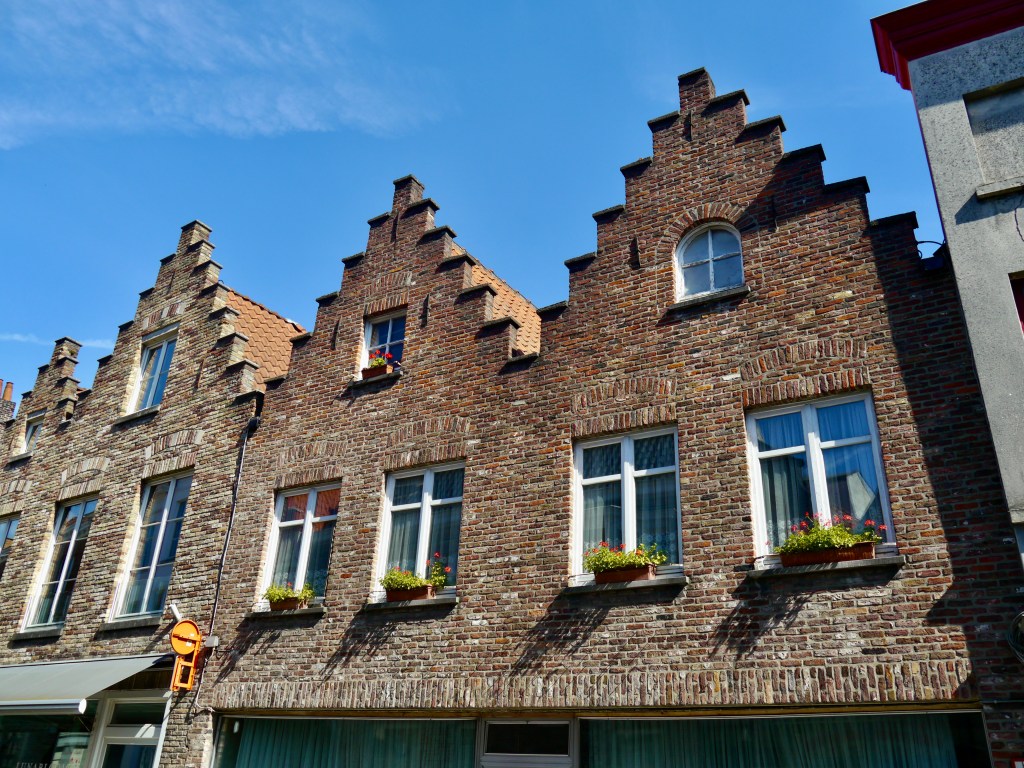
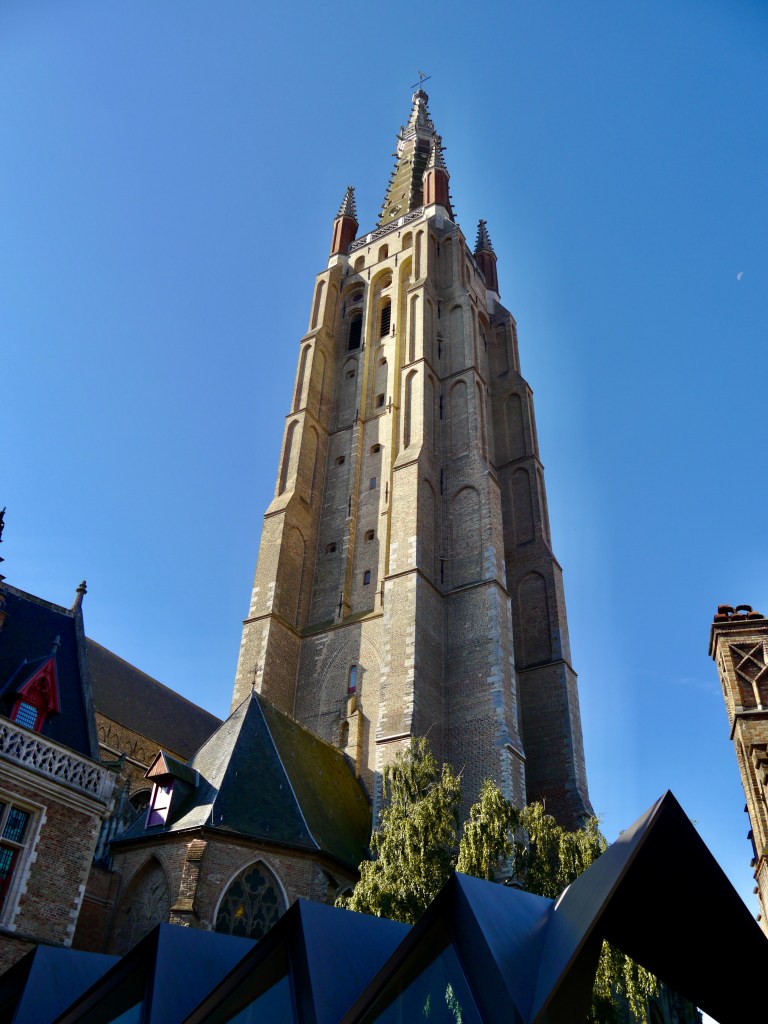

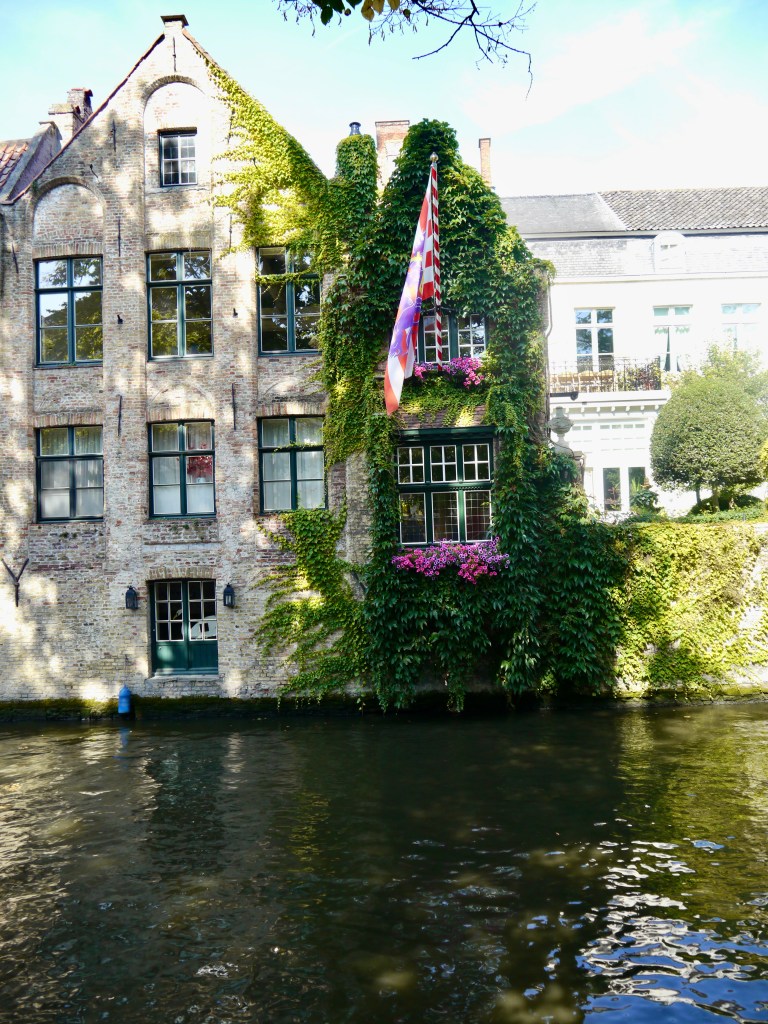
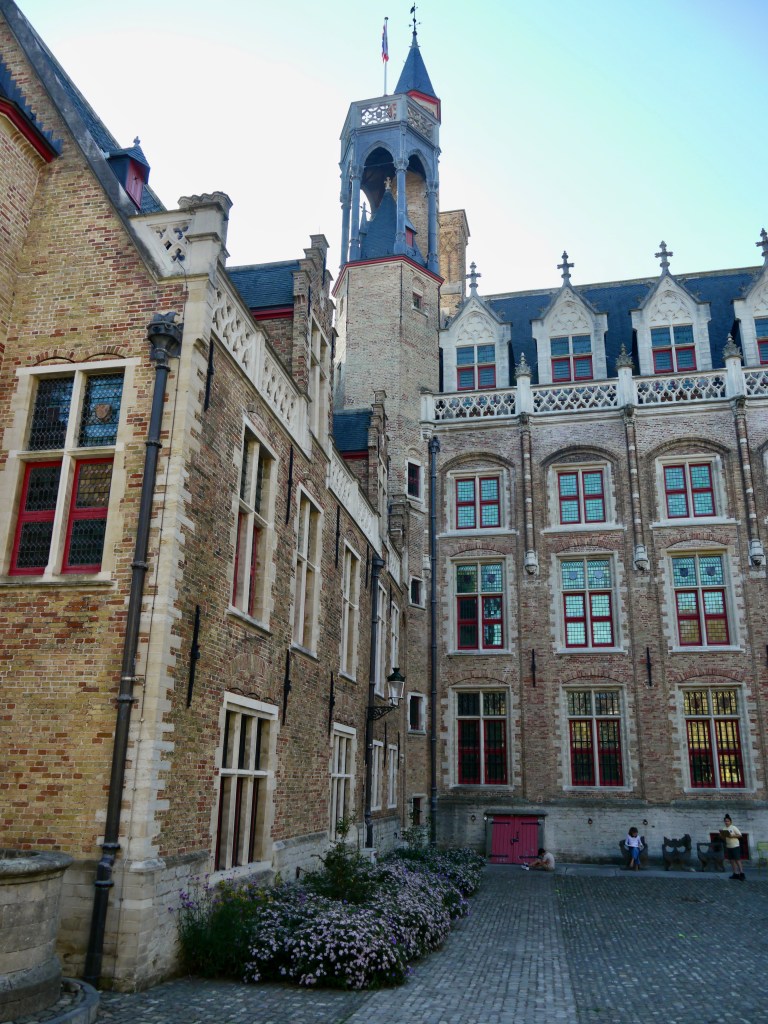
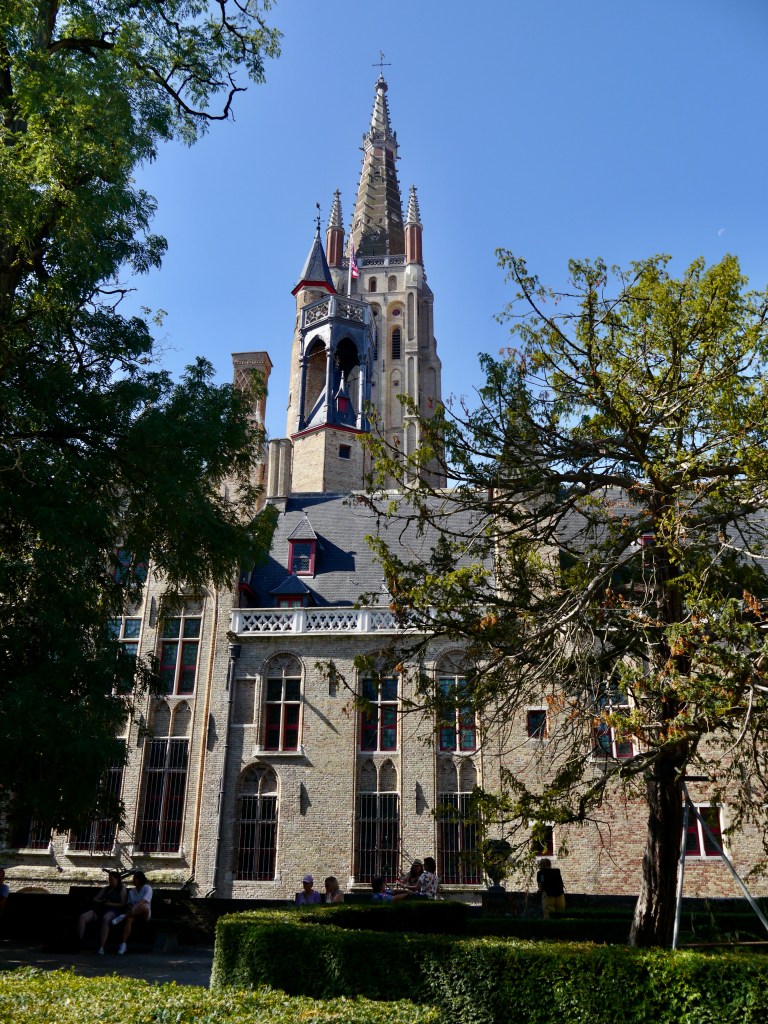
Scenes from around town
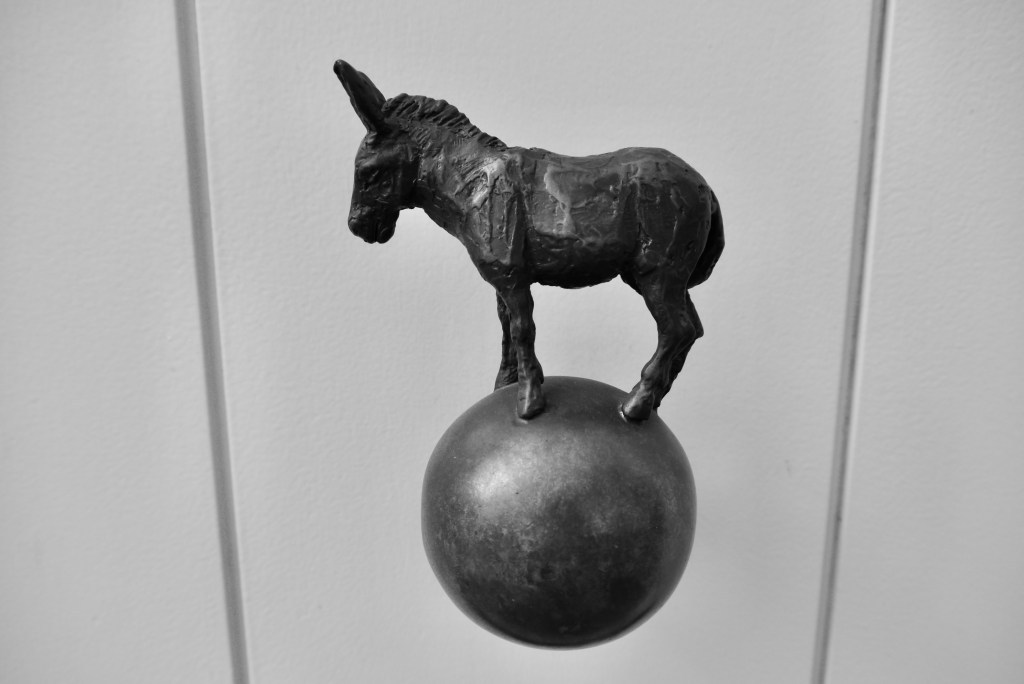
Our innkeeper recommended the canal tours. We watched the steady flow of packed boats cruise by, not an empty seat to be had. Sardine tourism during a heat wave isn’t my style, so we self-guided our own walking adventures; popping down alleys, poking in courtyards and, for me, lots of pauses for photography. Gotta love the donkey door knob!
We love museums and historic sites. Bruges did not let us down on that front. We opted for the 72-hour Musea Brugge card. For a set price, we had access to multiple sites. All had short lines and scanners for card holder admission. Worth every penny. One of my favorites was the Bruges Belfry.
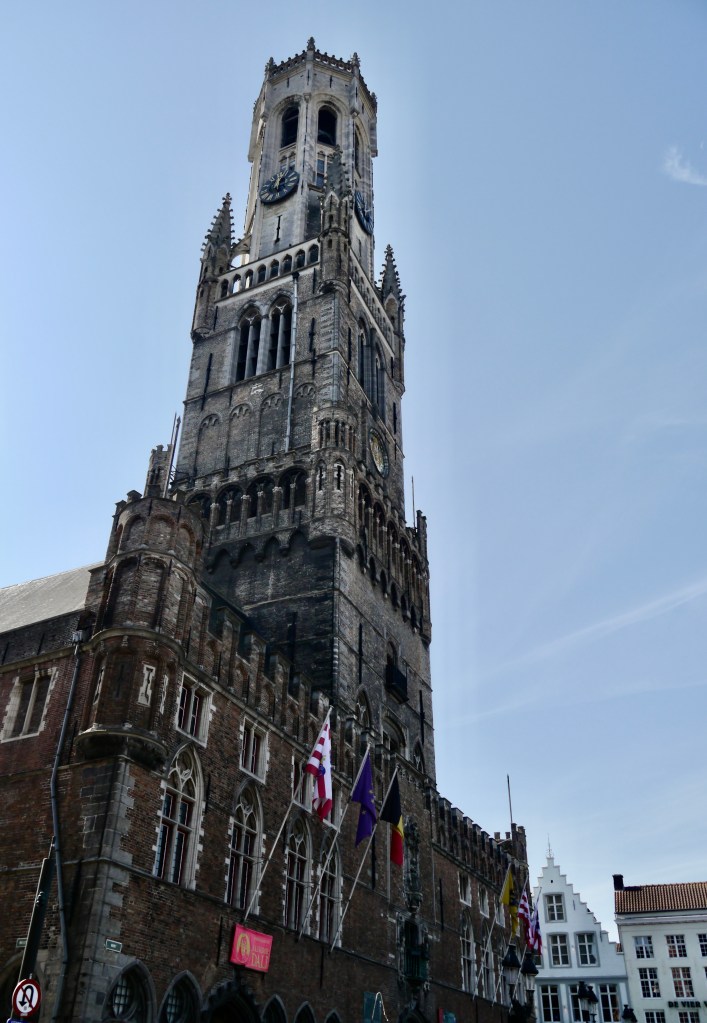
The Great Belfry (Belfort) was built between 1280 – 1350. The upper tower added in 1486. It is one of 3 towers in Bruges; all UNESCO heritage sites. Sound familiar? Would be if you had read about Ghent. The carillon in the Bruges Belfry has at least 47 bells.
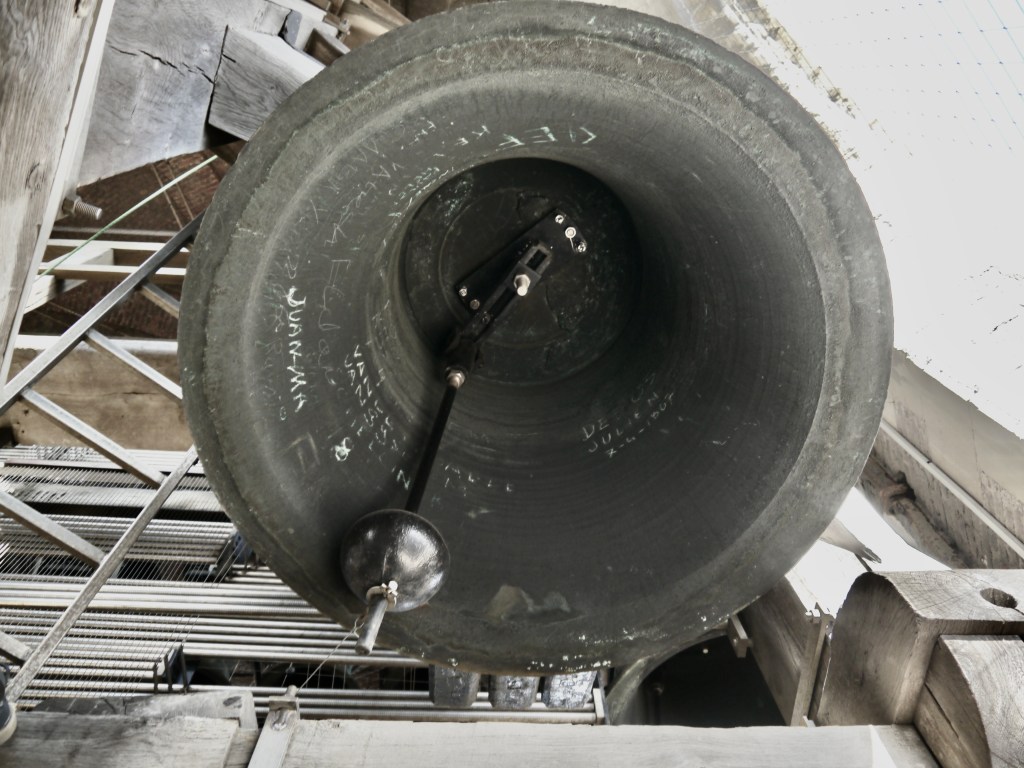
A carillon is a pitched percussion instrument that is played with a keyboard and consists of at least 23 bells. The bells are cast in bronze, hung in fixed suspension, and tuned in chromatic order so that they can be sounded harmoniously together. They are struck with clappers connected to a keyboard of wooden batons played with the hands, and pedals played with the feet.
Source: the world according to Wikipedia
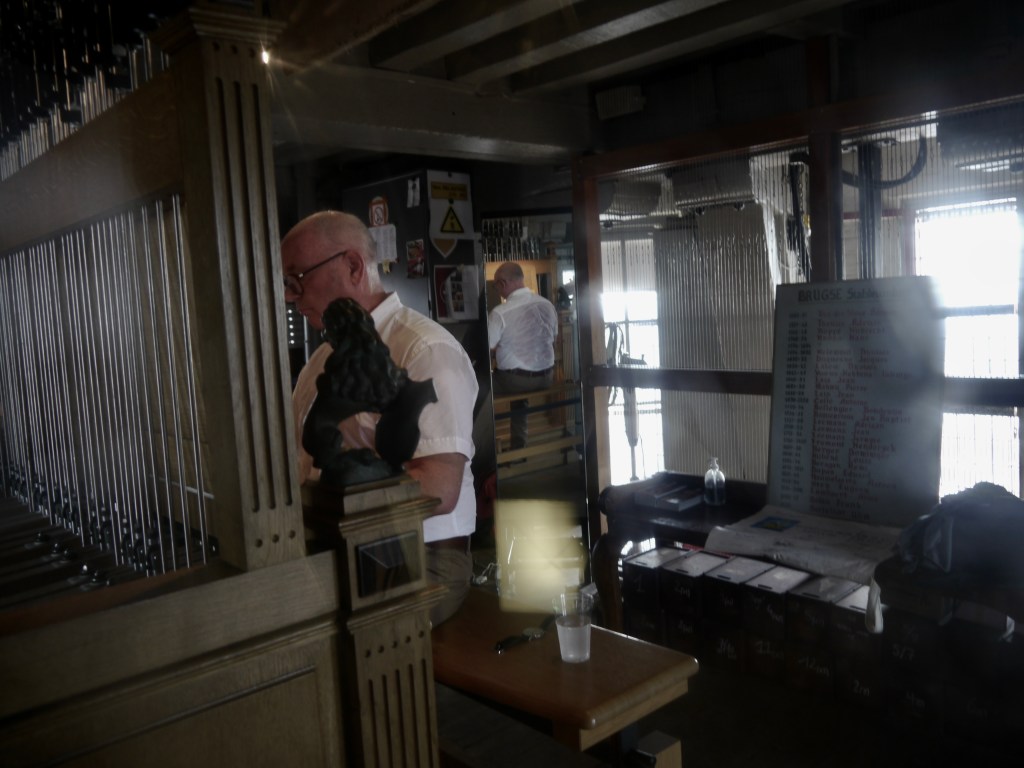
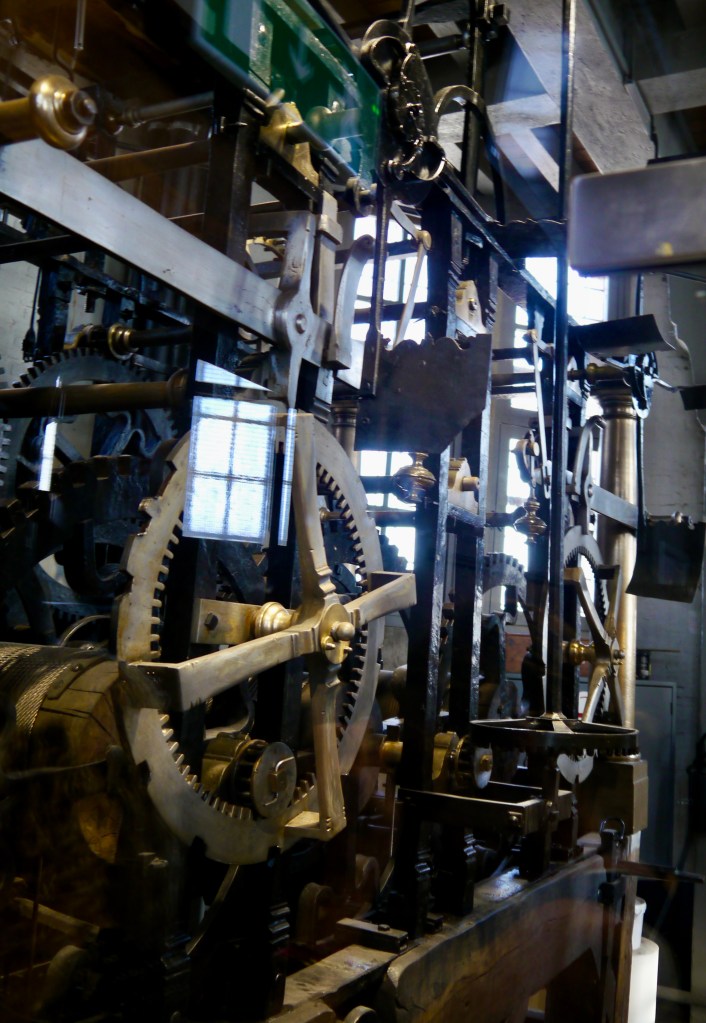
In the Bruges belfry, a city carillonneur plays on a specified schedule. Our tower entry ticket (part of the ticket package) coincided with a regular Sunday concert. The below link to a FB page shows the carillonneur playing. Worth a click. The bells were wonderfully deafening while in the tower.
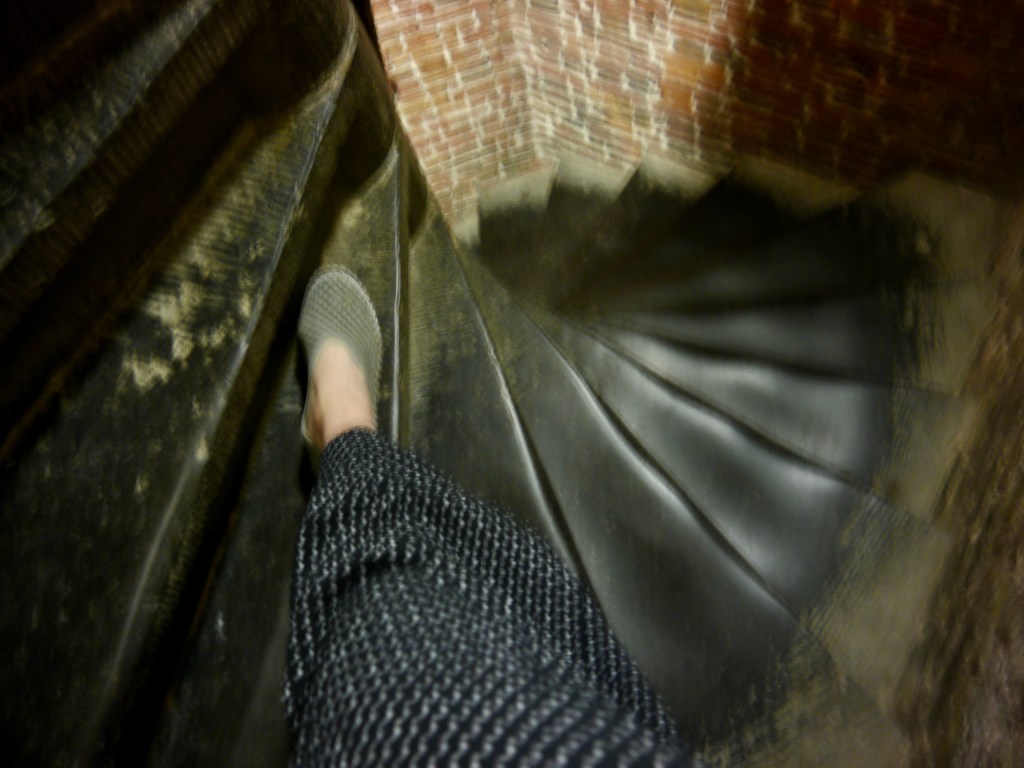
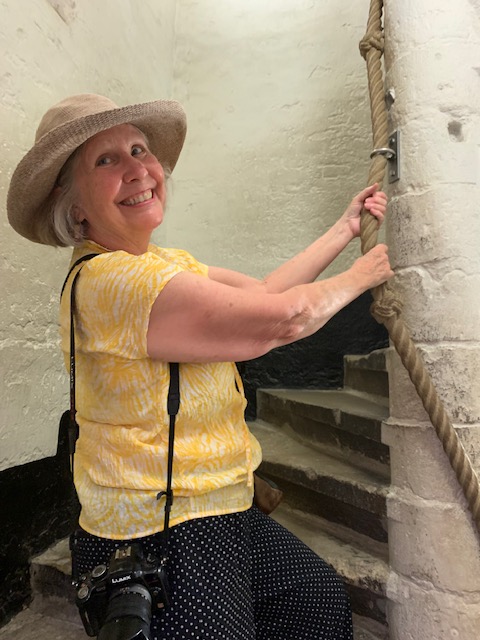
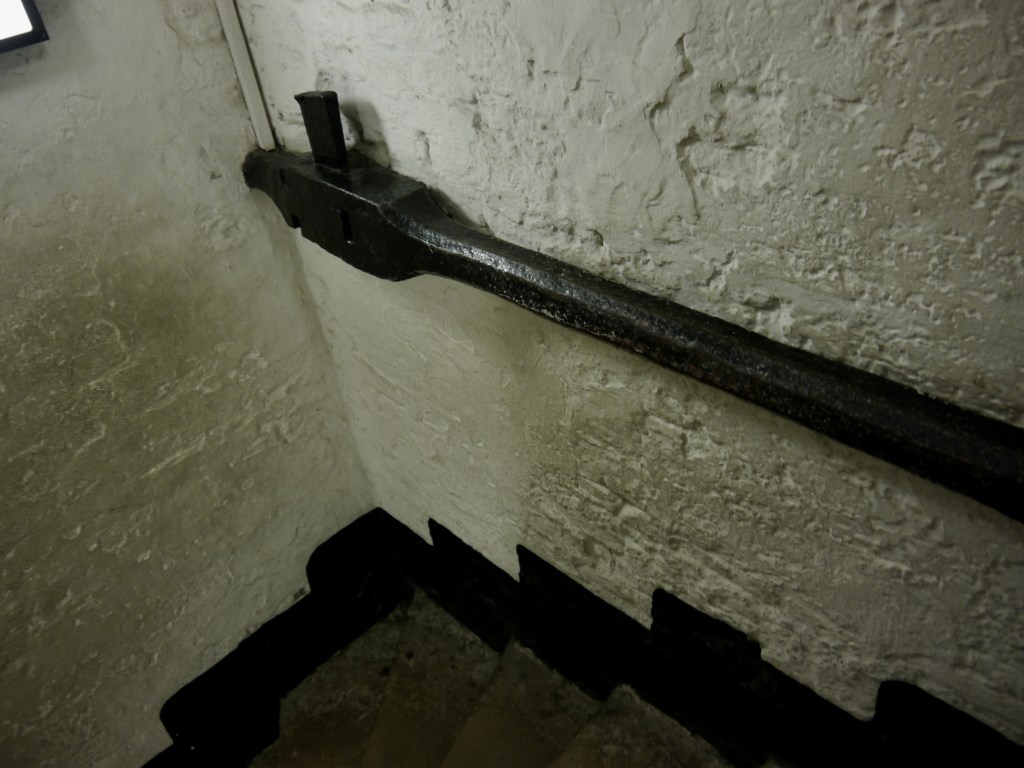
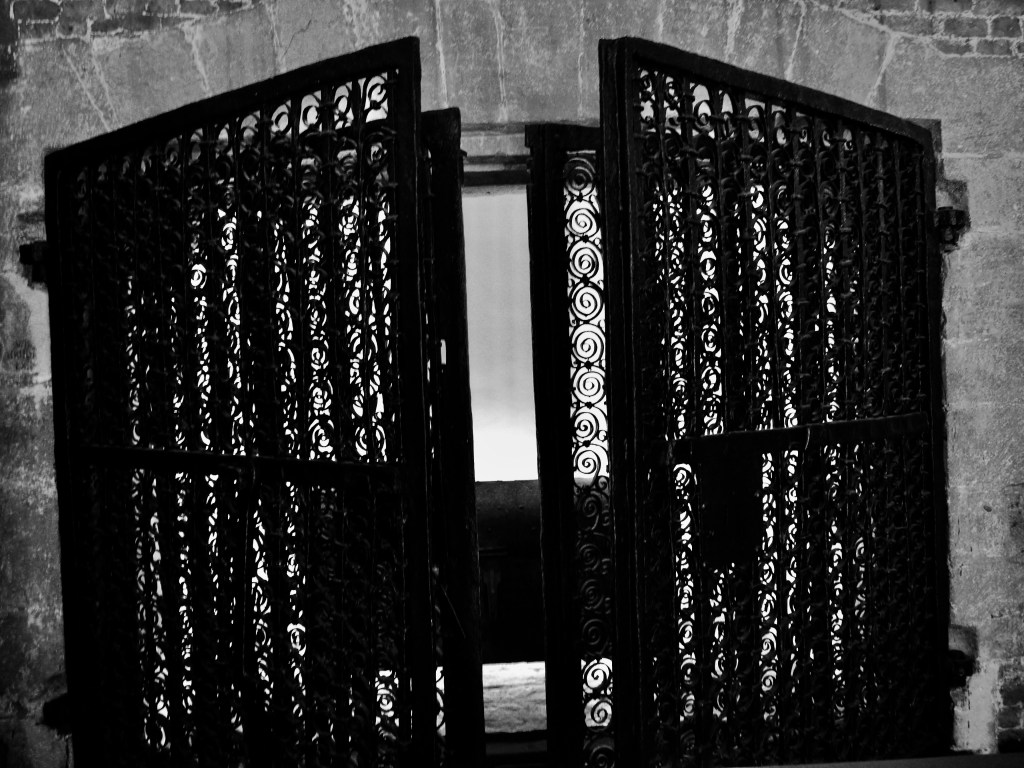
To reach the tower, you climb 366 steps. No elevators. On the way, you can stop in the old treasury room, an excuse to catch your breath, and learn a few historic factoids. The treasury is where important city papers and other items of value were ensconced behind iron grilles, constructed in 1292. Nine keys, kept by 9 city leaders, were simultaneously required to open the grilles.
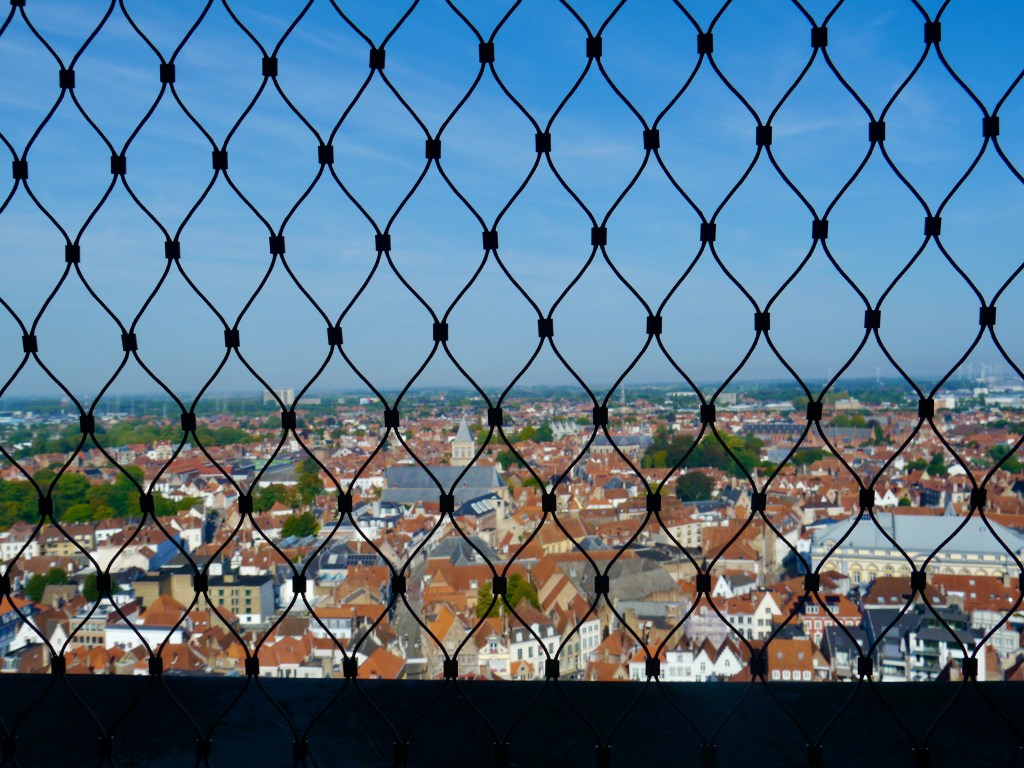
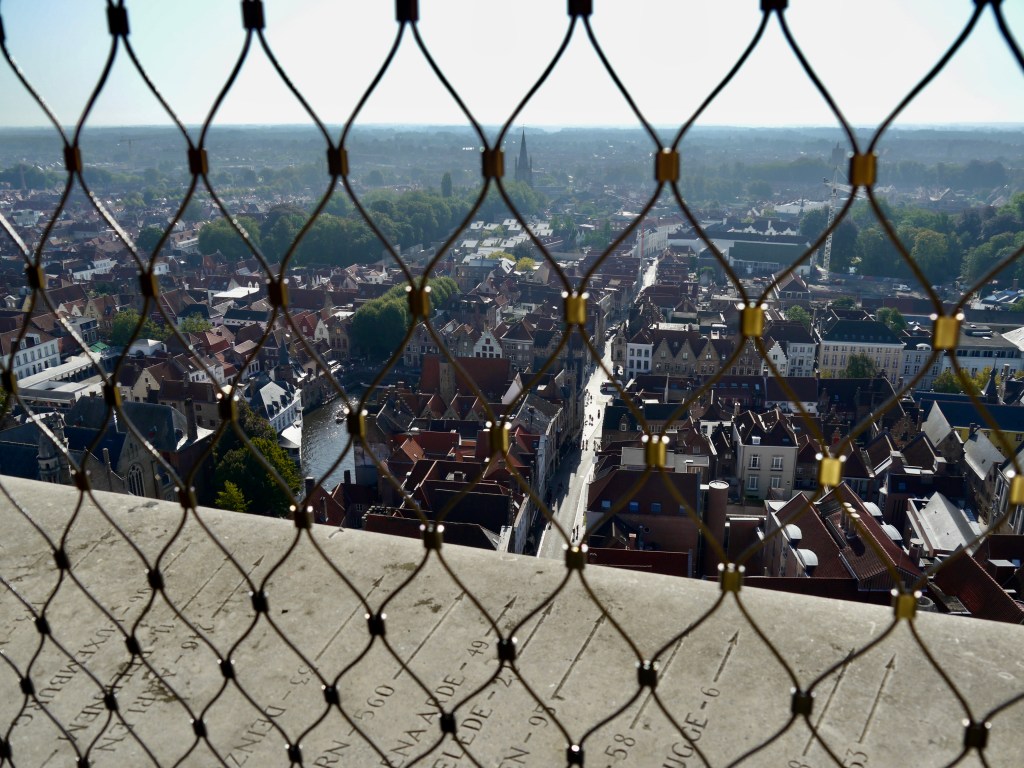
The climb was well worth the effort, even though the stairwell increasingly narrowed and the temperature had to be close to 90°F. Once at the top, the widows around the tower offered refreshing breezes and amazing views. Arrows pointing to other regions are etched in the concrete ledges outside the windows. And the bells rang on.
We wandered into The Church of our Lady to view Michelangelo’s Madonna and Child. He carved the sculpture in 1501 for Bruges. It was twice stolen. The first time by Napoleon’s troops, returned and then again by Nazi Germany. The Monuments Men found it in a salt mine, and returned it to Bruges. Another movie to watch.

The Groeningemuseum is a wonderfully curated art museum. Arranged in a series of rooms, the exhibit progressively covers six centuries of Flemish and Belgian art. The printed literature (in multiple languages) is approachable and educational. We spent a couple of hours looking and learning.
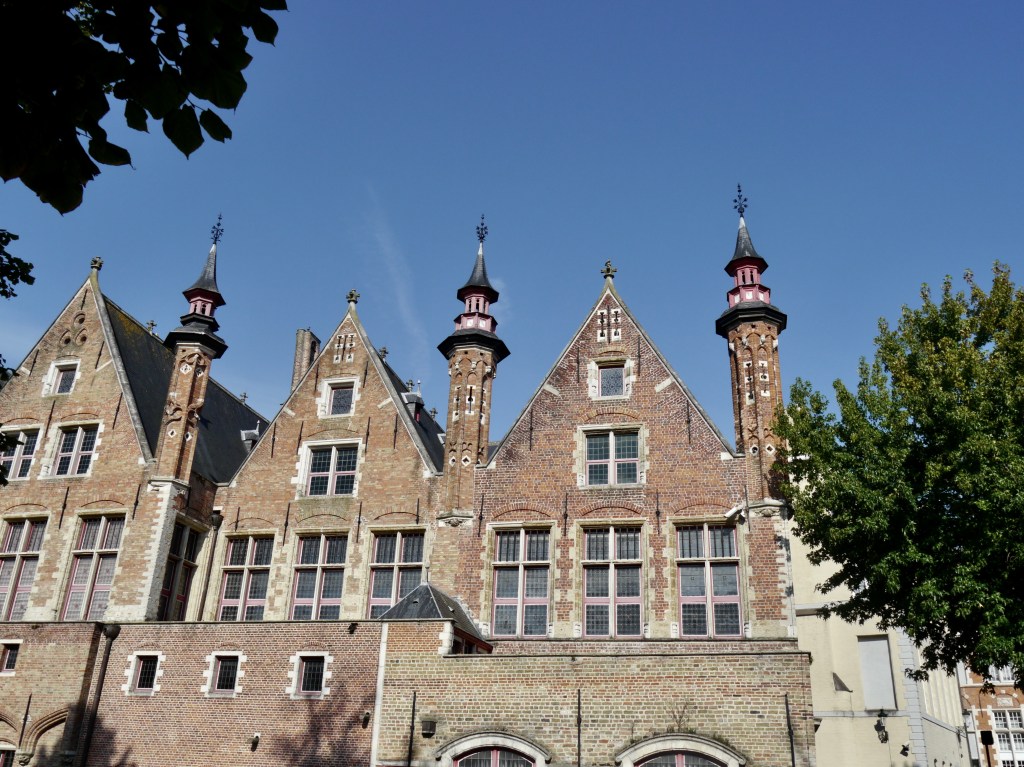
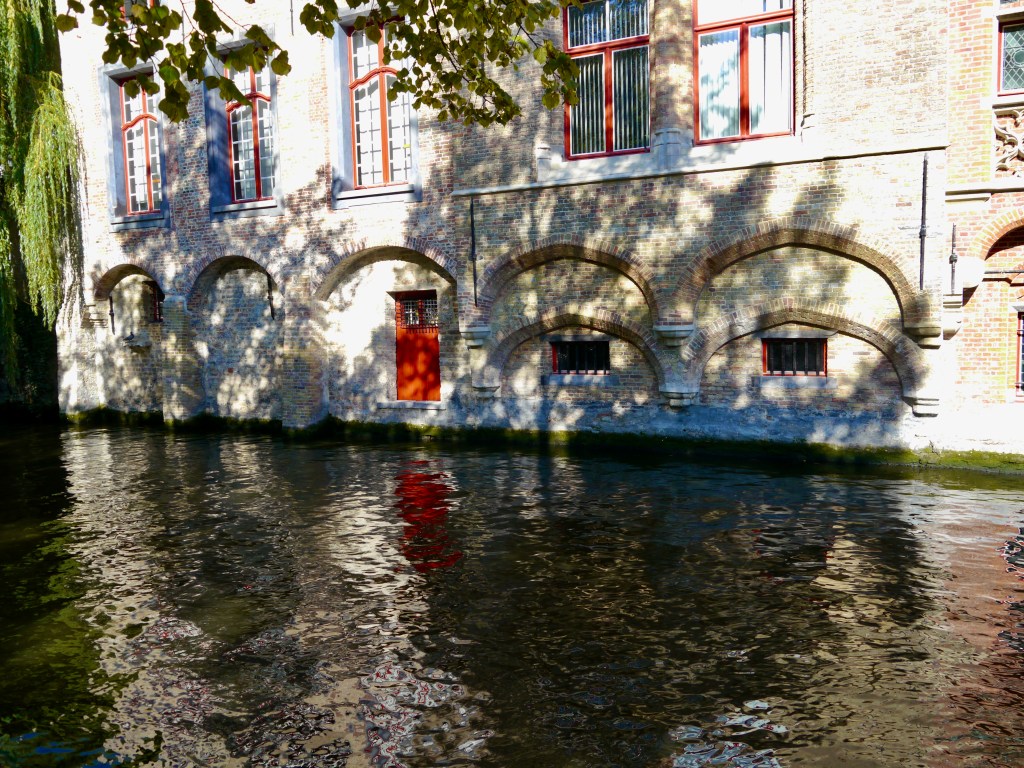

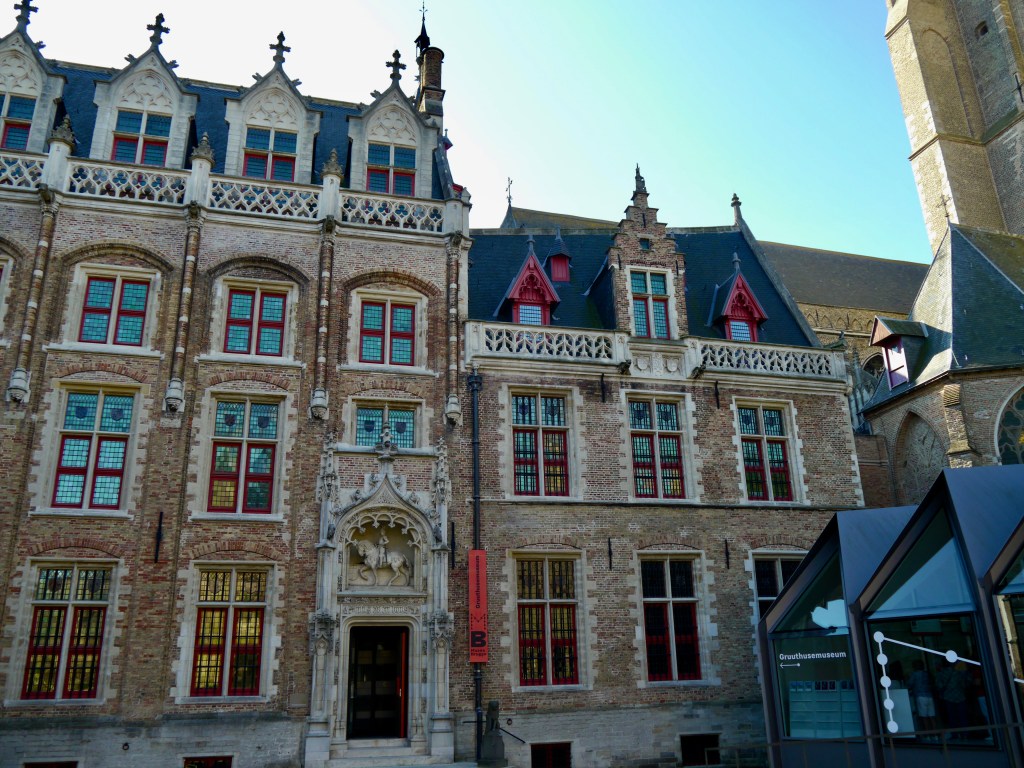
Bruges is a wonderful city. Lots of good food. Safe, clean and filled with eye-candy. I would definitely return and expand my exploration of Belgium.


 Geezer On The Go
Leave a reply to Bill Epstein Cancel reply